
SPC & Loose Lay LVT Flooring Supplier for Australia
Six questions for Australian buyers · AS / NCC requirements · Product range · Patterns & OEM
Six questions to settle before an Australian order
Does a European fire class work in Australia?
Not on its own. The NCC sets floor-covering fire performance as critical radiant flux tested to AS ISO 9239.1, with the required value depending on building class and area. An EN 13501-1 class such as Bfl-s1 is not an NCC value. Tell us the requirement and we confirm which report fits the build.
Which AS 4586 class does the area need?
Slip classes are reported per surface finish and test method. A wet pendulum result with Slider 96 is not interchangeable with Slider 55, so a P class only applies to the finish that was tested. Send the area type and required class with your enquiry.
Is 8 mm SPC enough for an apartment floor?
Thickness alone does not answer it. NCC Volume One Part F7 sound insulation is a result of the whole floor-ceiling assembly: flooring, backing or underlay, slab and ceiling. Product data supports the acoustic engineer’s assessment; it does not replace it.
What BMSB measures apply to flooring from China?
For the 2026–27 season (1 September 2026 to 30 April 2027), requirements depend on the goods, vessel route and shipment date. China is classified as an emerging risk country, so selected goods may be randomly inspected on arrival. Flooring from China is not automatically fumigated or treated. Confirm the current DAFF pathway with your broker before each shipment.
Is there anti-dumping duty on vinyl flooring?
When we checked in September 2026, vinyl and SPC flooring were not listed on the Australian Trade Remedies Commission’s Dumping Commodity Register. Measures depend on the declared product, origin and import date, so your customs broker should check the register and confirm tariff classification, ChAFTA origin eligibility, duty rate and GST for each entry.
Which documents come with my SKU?
Test reports and certificates cover specific builds, not the whole catalogue. We match them to the construction, thickness, wear layer and finish you order. Technical documents are in English. Ask for the document list with your quotation.
AS and NCC requirements for commercial flooring
Three parties share the decision: the product carries test data, the floor system is designed by the project team, and the building is signed off by the certifier.
Test reports for the exact construction, thickness, wear layer and finish.
Ecoflors suppliesSubfloor, underlay, fixing method and the full floor-ceiling assembly.
Designer / acoustic engineerNCC edition, building class, state or territory variations and final sign-off.
Project certifier| Requirement | What it governs | Level | What we need from you |
|---|---|---|---|
| AS ISO 9239.1 · fire | Critical radiant flux of the floor covering, as referenced by the NCC | Product | Building class, area and required value. We confirm which report applies to the build. |
| AS 4586 · slip | Slip class of the surface finish (wet pendulum or other method) | Product / finish | Area type and required class, plus the surface finish you want. |
| NCC Volume One Part F7 · sound | Airborne and impact sound insulation between dwellings | Assembly | Slab, ceiling and underlay design from the acoustic engineer. |
| BMSB seasonal measures | BMSB and biosecurity inspection or treatment requirements for the shipment | Shipment | Your broker’s confirmed DAFF pathway for the sailing date. |
| Tariff, ChAFTA, GST | Duty treatment and origin documents | Import entry | Your broker’s tariff classification and origin document requirement. |
Swipe the table sideways to see all columns.
NCC edition: NCC adoption varies by jurisdiction and transition arrangement. Victoria adopted NCC 2025 on 1 May 2026, while other jurisdictions may remain on NCC 2022 Amendment 2 or apply transitional arrangements. Confirm the applicable edition with the project certifier and the relevant state or territory authority.
Flooring and wall panels for Australian projects
Construction, thickness and wear layer are matched to the project’s traffic, subfloor and assembly. Test values in this section are reported per SKU, so ask which report covers the build you choose.
SPC Click
Rigid stone-polymer core with décor film and wear layer. Used in commercial fit-out and multi-residential projects where a floating click floor suits the subfloor.
Loose Lay LVT
Heavy friction-backed LVT without a click joint, used in office and tenancy fit-outs where a fast, low-disruption install is preferred to a fully bonded floor.
Method is specified by area size, traffic, subfloor and the installation plan.
ABA Flooring
SPC core with LVT layers above and below, widely called hybrid flooring. An option where buyers want a rigid click plank with a different layer structure from standard SPC.
SPC Wall Panels
SPC panels for interior walls, supplied alongside flooring so a distributor or fit-out contractor can consolidate one order. Wall linings fall under different NCC fire provisions from floor coverings, so confirm the requirement separately.
Indoor-air documents (FloorScore, GREENGUARD Gold) cover specific builds. Ask whether your SKU is covered and whether the project’s rating tool accepts it.
Patterns, surface and private label
Pattern formats, surface finish and own-brand packaging for distributors and fit-out projects. Each option is confirmed per construction in the quotation, and slip class applies only to the finish that was tested.
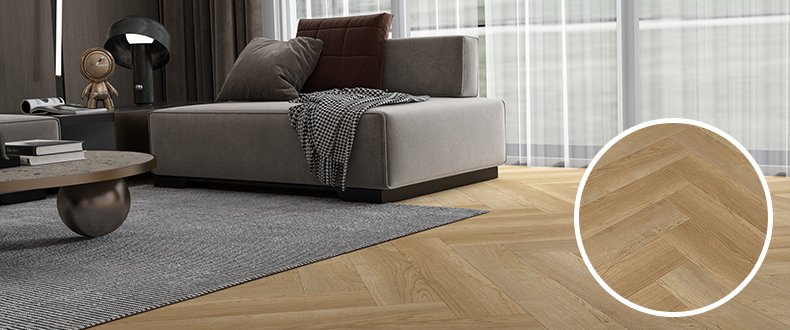
Herringbone
SPC click 110 × 610 mm and LVT dry back (glue-down) 153 × 765 mm, each with its own data sheet. For SPC click herringbone, A and B planks are packed separately.
Herringbone formats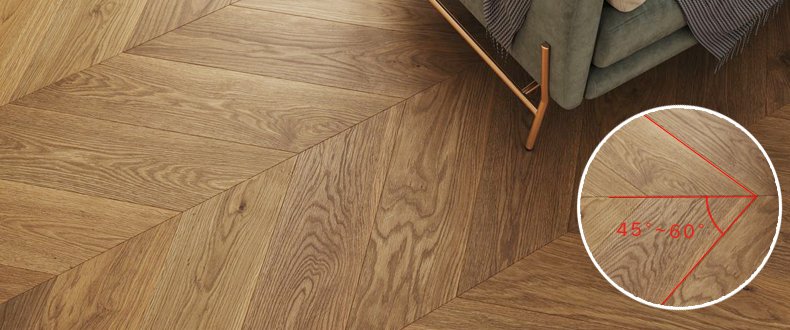
Chevron
Ends cut at an angle so the planks meet in a continuous point. Available dimensions are confirmed by construction and project requirement.
Chevron formats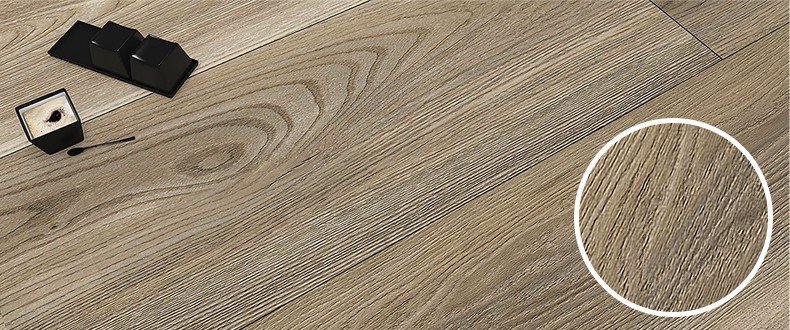
EIR surface
Embossed in register: the surface texture follows the printed wood grain. If the area needs an AS 4586 class, name the finish so the slip result can be matched to it.
EIR surface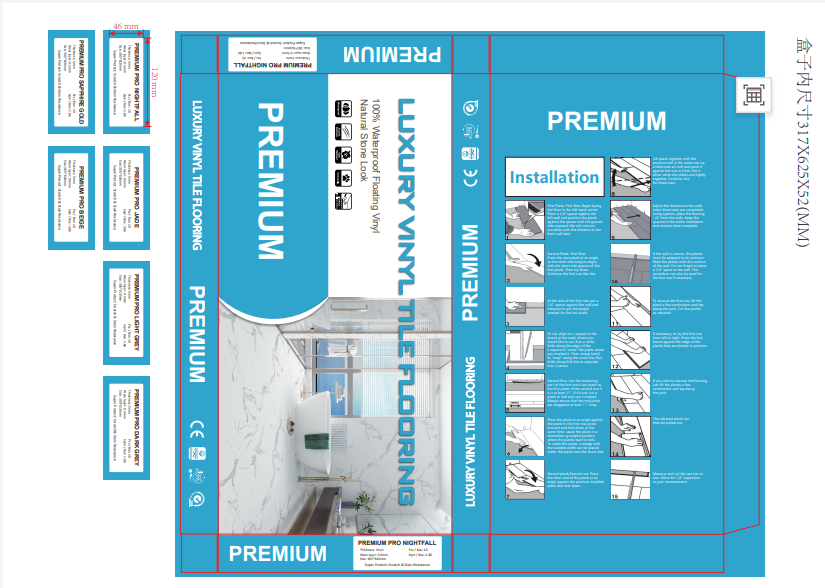
OEM package
Own brand, carton and label from 2,200 m² per custom design/colour. Send the carton marking your importer needs; we confirm what we can print before production.
OEM and private label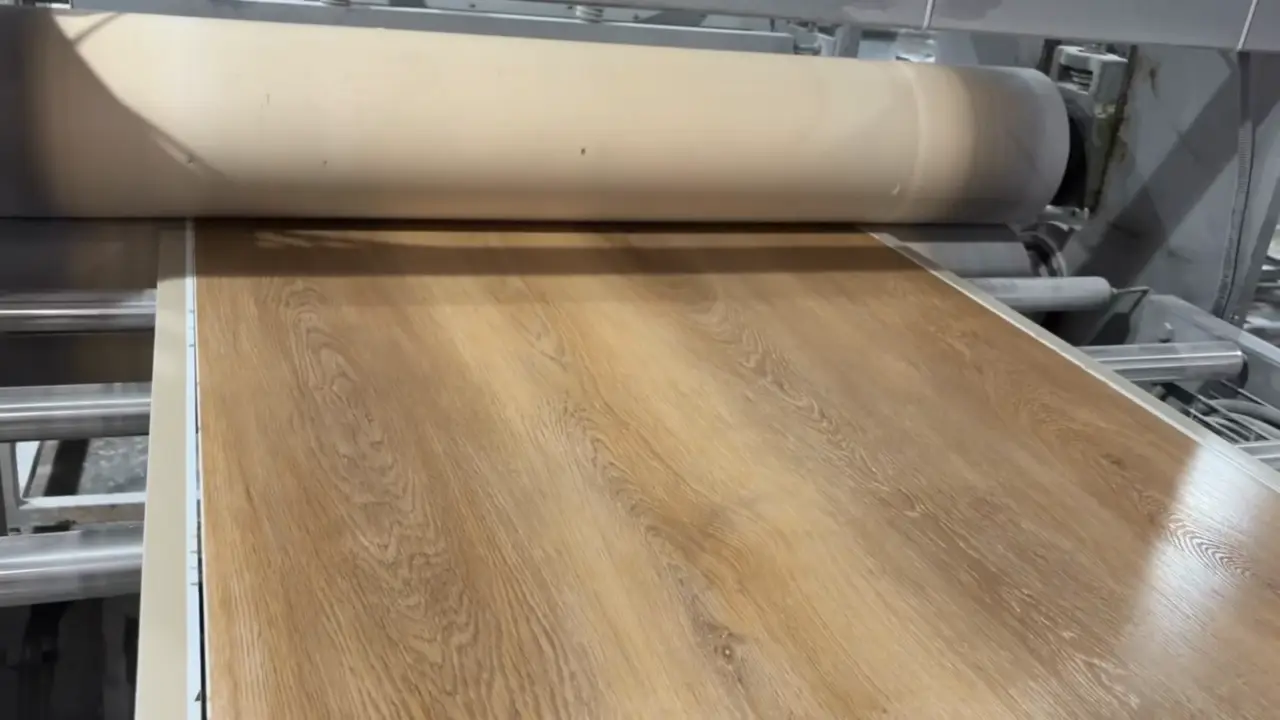
Wood-look SPC sheet on the production line.
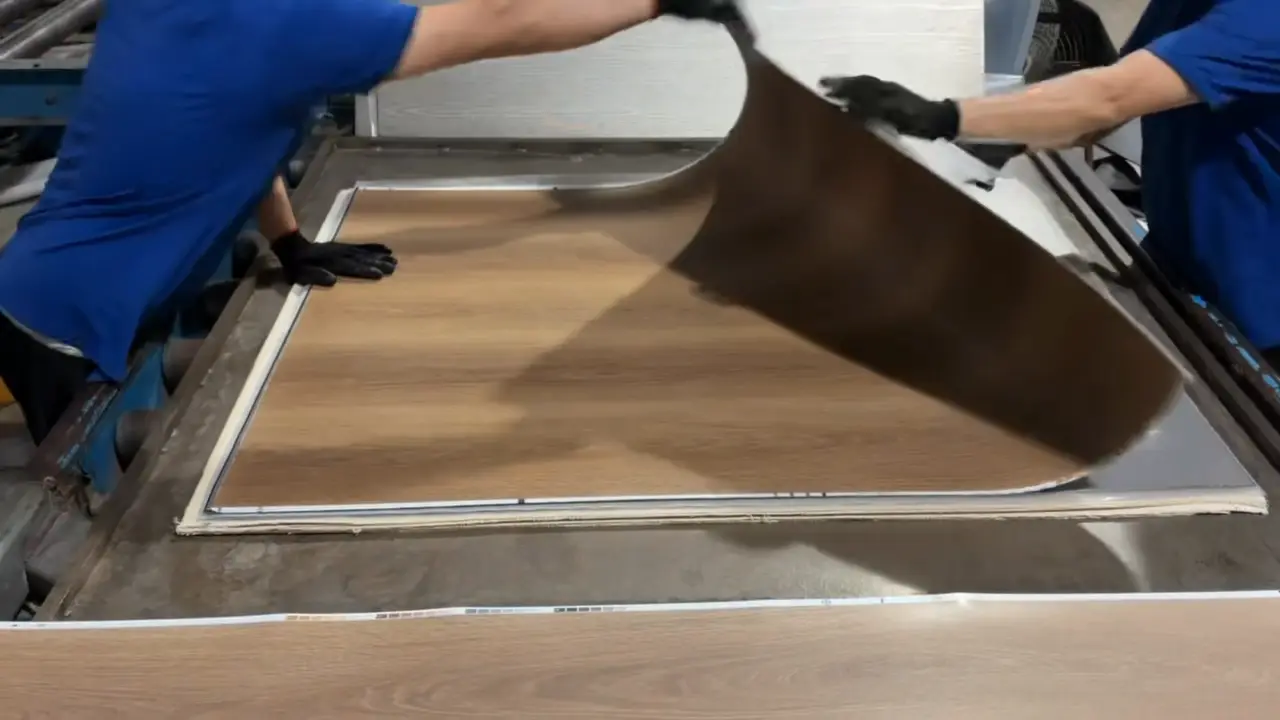
Workers handling a wood-look sheet during production.
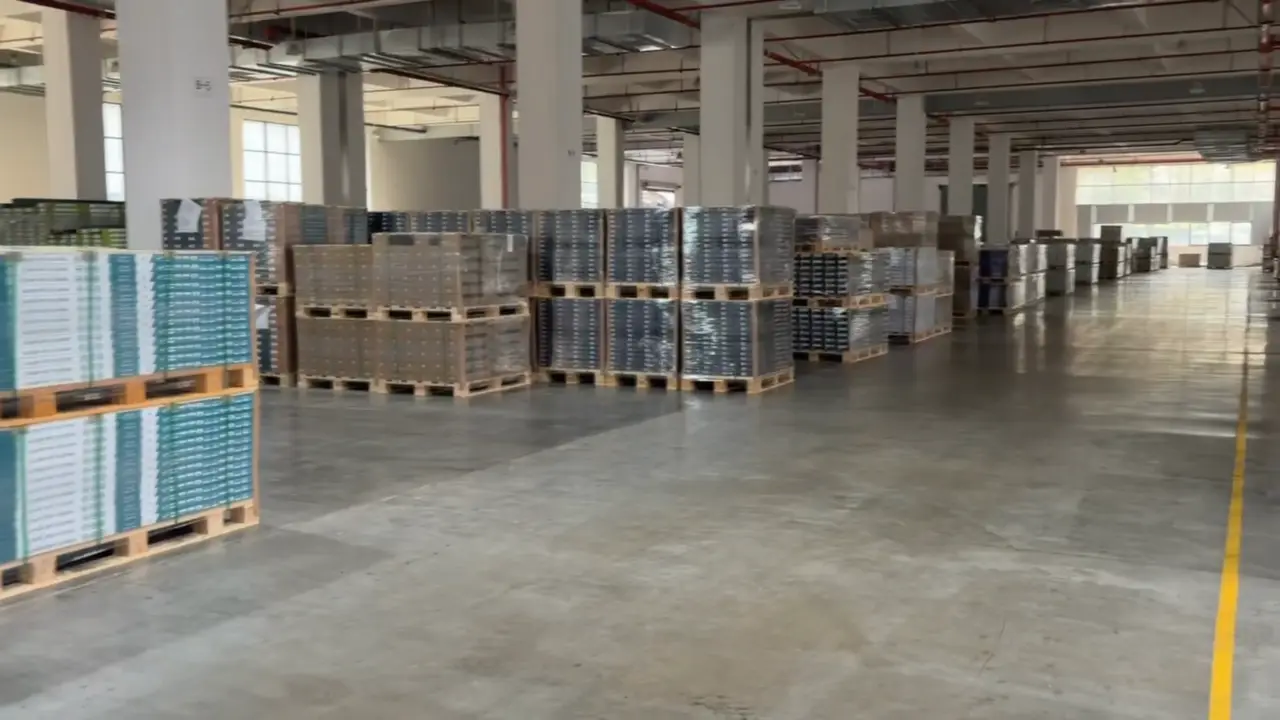
Packed cartons on pallets before loading.
Photos show production and storage, not test results. Normal production is usually 35–40 days; the quotation states the schedule and loading date. About Ecoflors
MOQ, production and shipping
MOQ is 800 m² per existing SKU/colour and 2,200 m² per custom design/colour. Normal production is usually 35–40 days once construction, colour, quantity, packaging and artwork are agreed. Sea-freight transit is separate and depends on the destination port and sailing.
DAFF and the Australian Trade Remedies Commission review these on their own schedules. Check current status for each shipment rather than relying on a previous order.
Send the specification
Product, construction, thickness, wear layer, area type, quantity, destination port, and the fire, slip and acoustic targets from the project documents.
Which build fits and which test reports cover it. Where a report for the required standard does not cover the build, we say so before quoting.
Samples, if needed
Request a sample kit to check colour, surface finish and click joint. Buyers with a fixed specification can go straight to quotation.
The sample matches the quoted build. Samples are free; the buyer pays the courier.
Quotation and purchase order
Quantity per SKU, packaging, private-label artwork if any, and the document list for the order.
Production lead time once the order details are agreed, and the documents that ship with it.
Loading and shipment
Your broker confirms the BMSB pathway, tariff classification and origin documents for the sailing.
A loading plan and packing list with per-carton gross weight before shipment.
Official sources
Checked October 2026. Rules change by season and jurisdiction, so check the current page before each project or shipment.
- ABCB · National Construction Code
NCC editions, adoption and fire, sound and access provisions. - Victorian Building Authority · building standards
Victoria’s NCC 2025 adoption from 1 May 2026. - DAFF · brown marmorated stink bug measures
Seasonal BMSB measures, risk-country lists and goods in scope. - Australian Trade Remedies Commission · Dumping Commodity Register
Current anti-dumping and countervailing measures by product and origin.
Send your project requirements
Company, a business contact and what you need are enough to start. Other details can follow, but these help us match documents faster:
Specifications and quantities can be left open. We reply with the matching build, the documents that cover it and the production lead time.
Or email sales@ecoflors.com.