
Loose Lay LVT Flooring for Importers, Distributors & Project Buyers
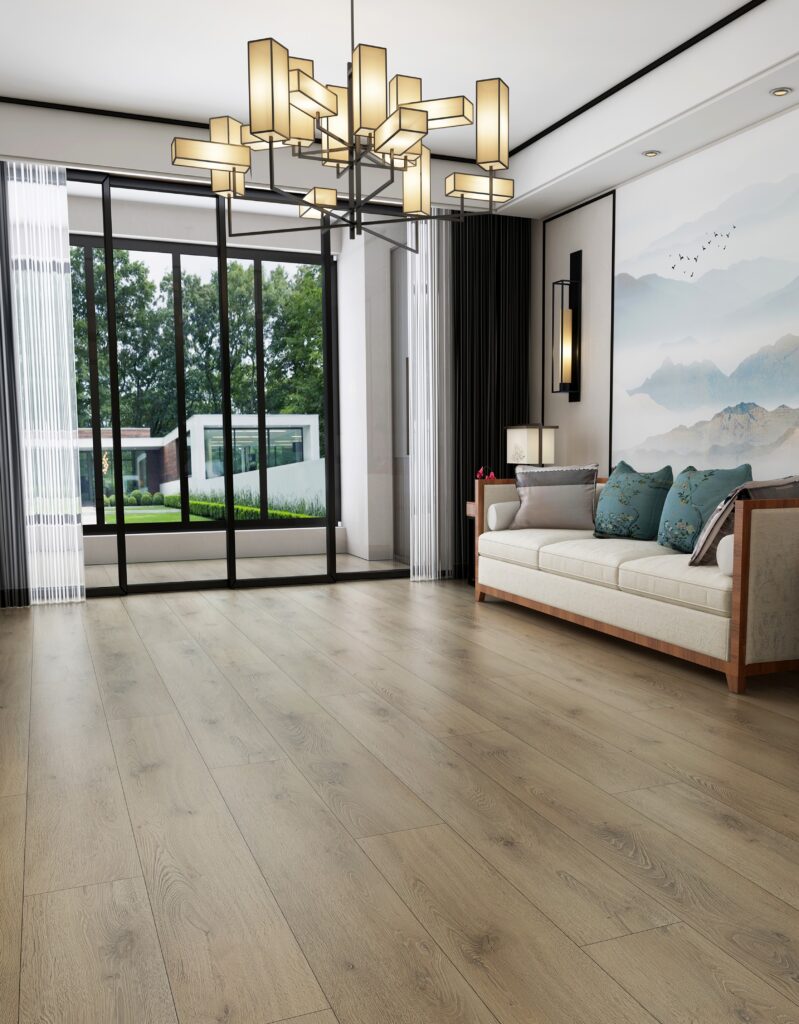
Loose Lay LVT is flexible vinyl plank or tile with a fibreglass-reinforced LVT layer and an anti-skid backing. It is laid edge to edge without a click joint or full-spread adhesive bed. Project conditions determine whether perimeter or grid fixing is also required.
- 4 / 4.5 / 5 mm
- 0.55 / 0.70 mm wear layer
- Three plank and three tile formats
- Documents matched by SKU
- Current thicknesses
- 4–5 mm
- Wear-layer routes
- 0.55 / 0.70
- Current formats
- 6
- Production networkMain production in Jiaxing, with selected partner processes mainly in the Changzhou area.
- Datasheets by buildThickness, wear layer, format and fixing method are checked before prices are compared.
- Documents by SKUReports and declarations are matched to the proposed construction and destination market.
- B2B programmeFor importers, distributors, private labels and commercial project procurement.
Start with how the floor stays in place
These answers define the category. Exact dimensions, packing and test values remain on the current build pages and datasheets.
What is Loose Lay LVT?
It is flexible LVT without a click joint, installed on an anti-skid backing. The fibreglass-reinforced LVT layer supports dimensional stability while the backing sits against the prepared substrate.
Does “loose lay” always mean zero adhesive?
The current datasheets state loose-lay installation without a full-spread adhesive bed. Room size, traffic, sunlight, doorways and the substrate may still require perimeter or grid fixing under the approved installation plan.
What changes between 4, 4.5 and 5 mm?
The current datasheets declare the same wear-layer choices, formats and test values. Thickness changes finished floor height, calculated board weight and the amount of flooring that fits in a container.
What utilisation class is declared?
No utilisation class is declared on the current 4 mm, 4.5 mm or 5 mm Loose Lay datasheets. A wear-layer thickness does not create a class. Send the required class so the correct documented build can be checked.
Compare thickness, floor height and loading
All three current builds use 0.55 mm or 0.70 mm wear layers and the same six-format programme. The loading ranges below come from the current datasheet packing basis.
4 mm Loose Lay LVT
The lowest-profile current build for a range or tender that accepts 4.0 mm.
- Total thickness
- 4.0 mm
- Wear layers
- 0.55 / 0.70 mm
- Formats
- 3 planks · 3 tiles
- 20 ft GP estimate
- 3,032–3,139 m²
4.5 mm Loose Lay LVT
For buyers whose floor build-up, assortment or tender names a 4.5 mm board.
- Total thickness
- 4.5 mm
- Wear layers
- 0.55 / 0.70 mm
- Formats
- 3 planks · 3 tiles
- 20 ft GP estimate
- 2,691–2,819 m²
5 mm Loose Lay LVT
For 5.0 mm specifications and ranges that need to align with adjoining floor height.
- Total thickness
- 5.0 mm
- Wear layers
- 0.55 / 0.70 mm
- Formats
- 3 planks · 3 tiles
- 20 ft GP estimate
- 2,435–2,487 m²
Current evidence boundary: the comparison uses Ecoflors Loose Lay TDS version 2026.09.23-R01. Container ranges are estimates at up to 25,000 kg cargo gross weight; the final quantity is recalculated for the SKU mix, pallet plan and inland route.
Loose Lay, Click LVT or Dryback?
The three systems use different methods to keep the floor in place. Choose from the project requirement before comparing prices at the same thickness.
| Decision | Loose Lay LVT | Click LVT | Dryback LVT |
|---|---|---|---|
| How it stays down | Anti-skid backing; project fixing plan may add perimeter or grid fixing. | Mechanical click joint assembled as a floating floor. | Full-spread adhesive over a prepared subfloor. |
| Joint | No click joint; pieces are laid edge to edge. | Profiled locking joint. | No click joint; pieces are bonded to the substrate. |
| Access and replacement | A piece can be lifted where the fixing plan permits, useful when the project needs access below the floor. | Access depends on the room layout and position within the click installation. | Replacement requires removal of the bonded piece and adhesive preparation. |
| Subfloor focus | Flatness, stability, cleanliness, backing contact and project fixing details. | Flatness, expansion planning and locking-system instructions. | Smoothness, dryness, adhesive compatibility and curing conditions. |
Seven visible layers in the Loose Lay construction
The numbered descriptions follow the seven layers shown in the construction illustration. Final material specification, thickness and test scope are confirmed against the current datasheet for the selected Loose Lay SKU.
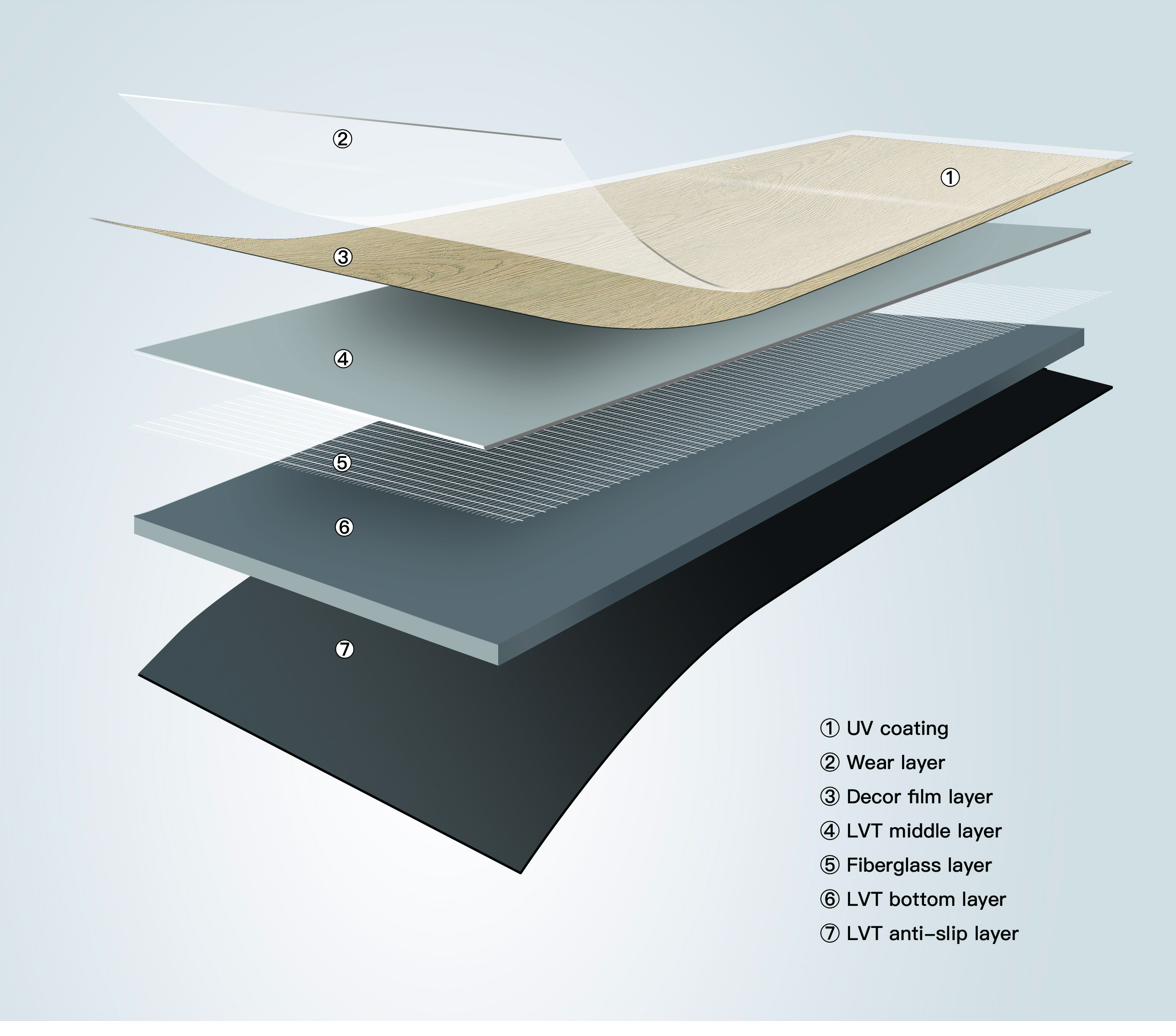
UV coating
Matte surface treatment selected with the approved décor and texture programme.
Transparent wear layer
Current builds are documented at 0.55 mm or 0.70 mm under ISO 24340.
Décor film layer
Defines the approved wood, stone, terrazzo, carpet or other visual direction.
LVT middle layer
Forms the upper part of the flexible LVT body beneath the décor and wear layers.
Fibreglass layer
Provides reinforcement within the flexible construction. The exact configuration is confirmed for the selected build.
LVT bottom layer
Forms the lower part of the LVT body and supports the backing system.
LVT anti-slip layer
The underside sits against the prepared substrate. Current builds do not include an attached IXPE or EVA underlay.
Four project checks before Loose Lay is approved
“No full-spread adhesive” does not remove the need for an installation plan. The flooring supplier, installer and access-floor or substrate supplier need compatible instructions.
Substrate
Confirm flatness, strength, cleanliness, surface condition and compatibility with the anti-skid backing.
Room and traffic
Share the room dimensions, entrances, rolling loads, direct sunlight and traffic pattern so the fixing plan can be reviewed.
Perimeter or grid fixing
Check whether the installation instruction calls for releasable fixing at edges, doorways, transitions or within the field.
Raised access floors
Confirm the panel system, joints, concentrated loads and access frequency. Loose Lay construction alone does not approve every raised-floor project.
Use declared results, then check the exact SKU
The current 4 mm, 4.5 mm and 5 mm datasheets declare the same results below. Fire, slip, emissions and utilisation class are not presented here as range-wide ratings.
Dimensional stability
ISO 23999:2021. Confirm the current report and construction before using the value in a submittal.
Curling
ISO 23999:2021 on the current datasheet builds.
Residual indentation
ISO 24343-1:2007 on the current datasheet builds.
Castor-chair cycles
No visible damage declared under ISO 4918:2016.
Abrasion group
Declared to EN 660-2 for the current datasheet constructions.
Utilisation class
Do not infer a class from total thickness, wear-layer thickness or installation method.
If a specification names fire, slip, emissions, utilisation class or another standard, send the standard and proposed build. We will check which report applies and identify any evidence gap before the claim enters a quotation or submittal.
Build the range around the format, décor and surface
Use the nine surface directions below to brief the required tactile and visual result. Exact availability is checked against the Loose Lay thickness, size, wear layer, décor, coating and approved sample.
Nine surface texture directions
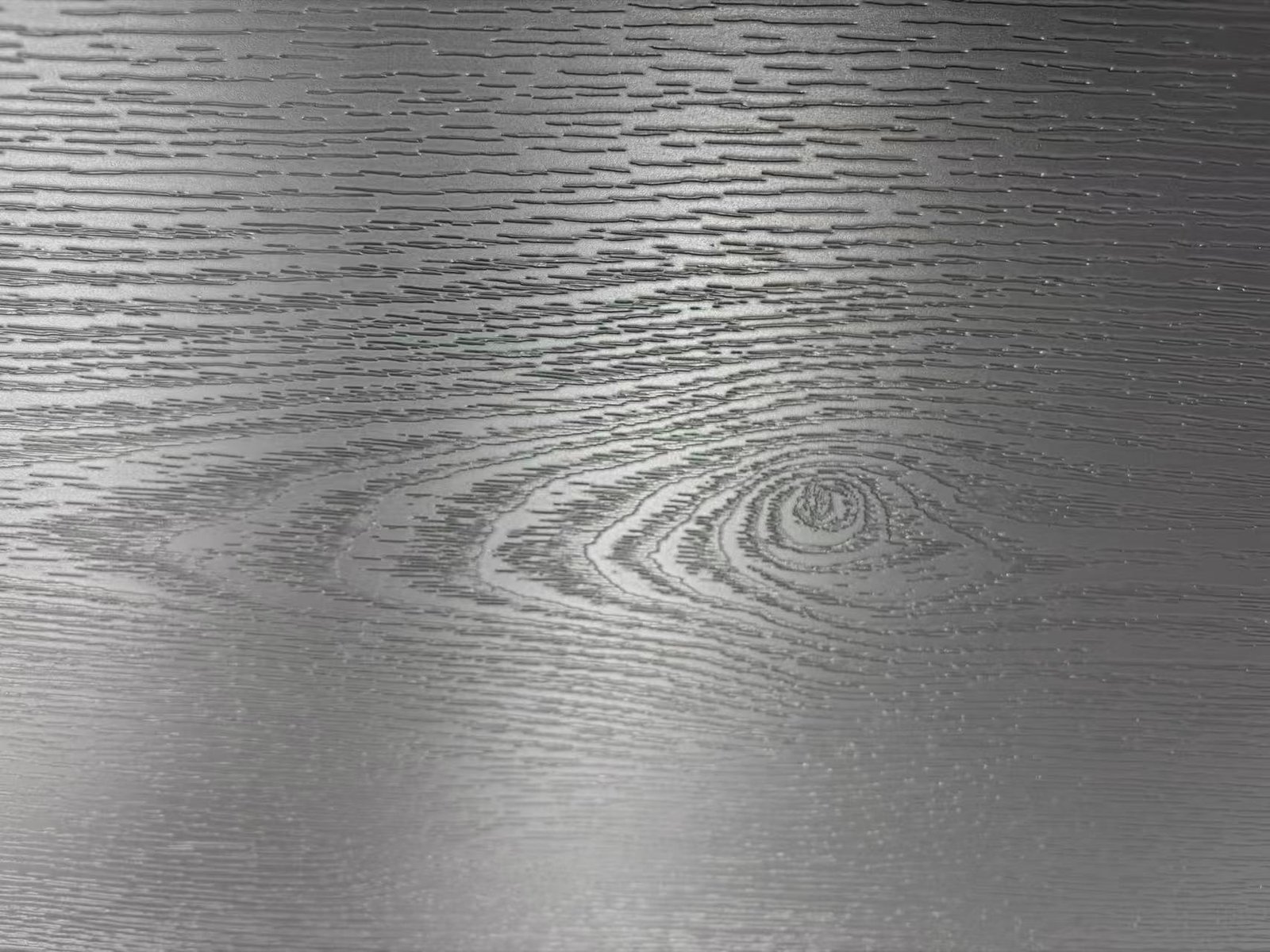
EIR: Embossed in Register
Print and embossing align for a more realistic selected wood-look programme.
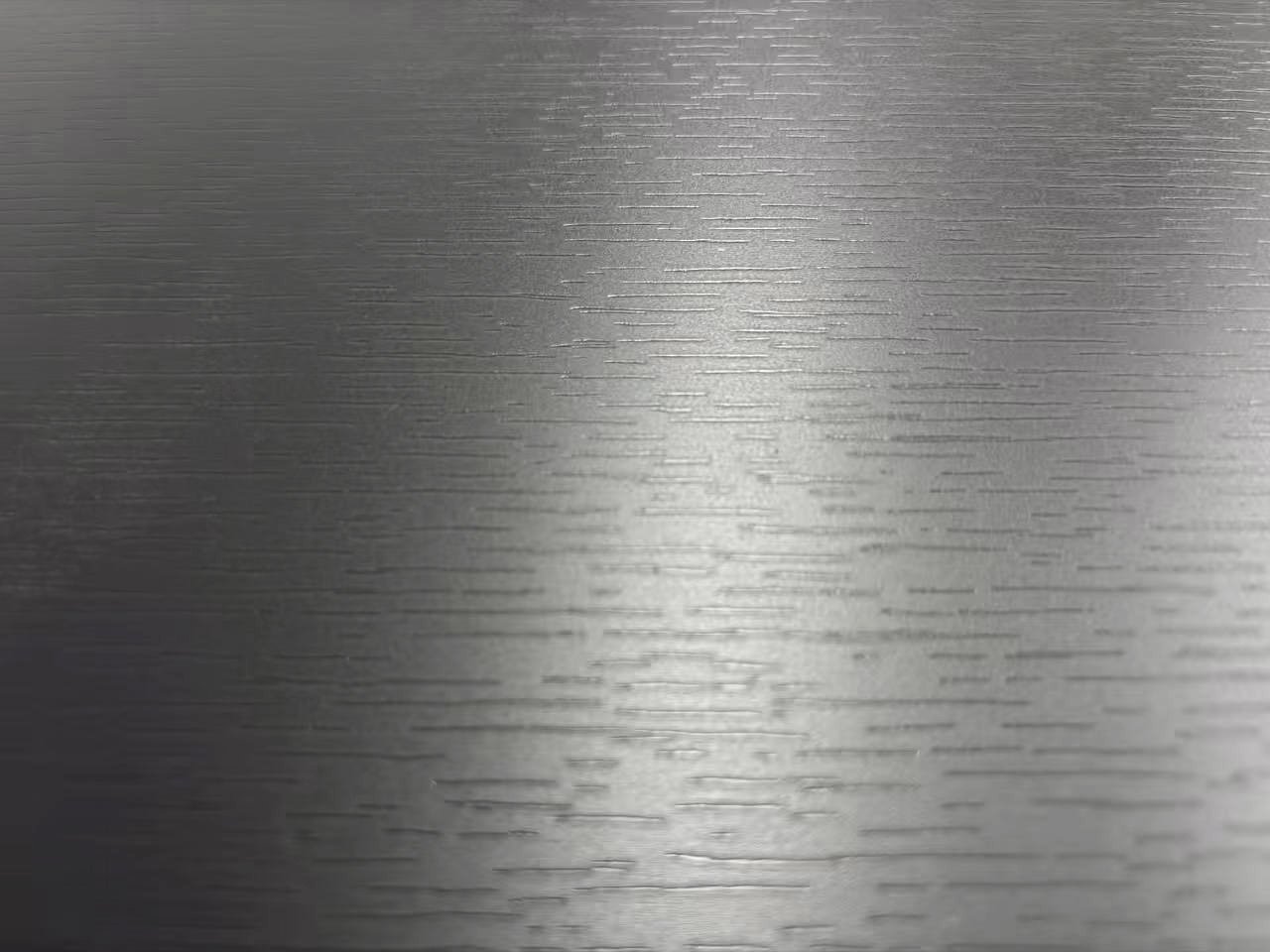
Crystal texture
A clean embossed direction for modern wood and neutral collections.
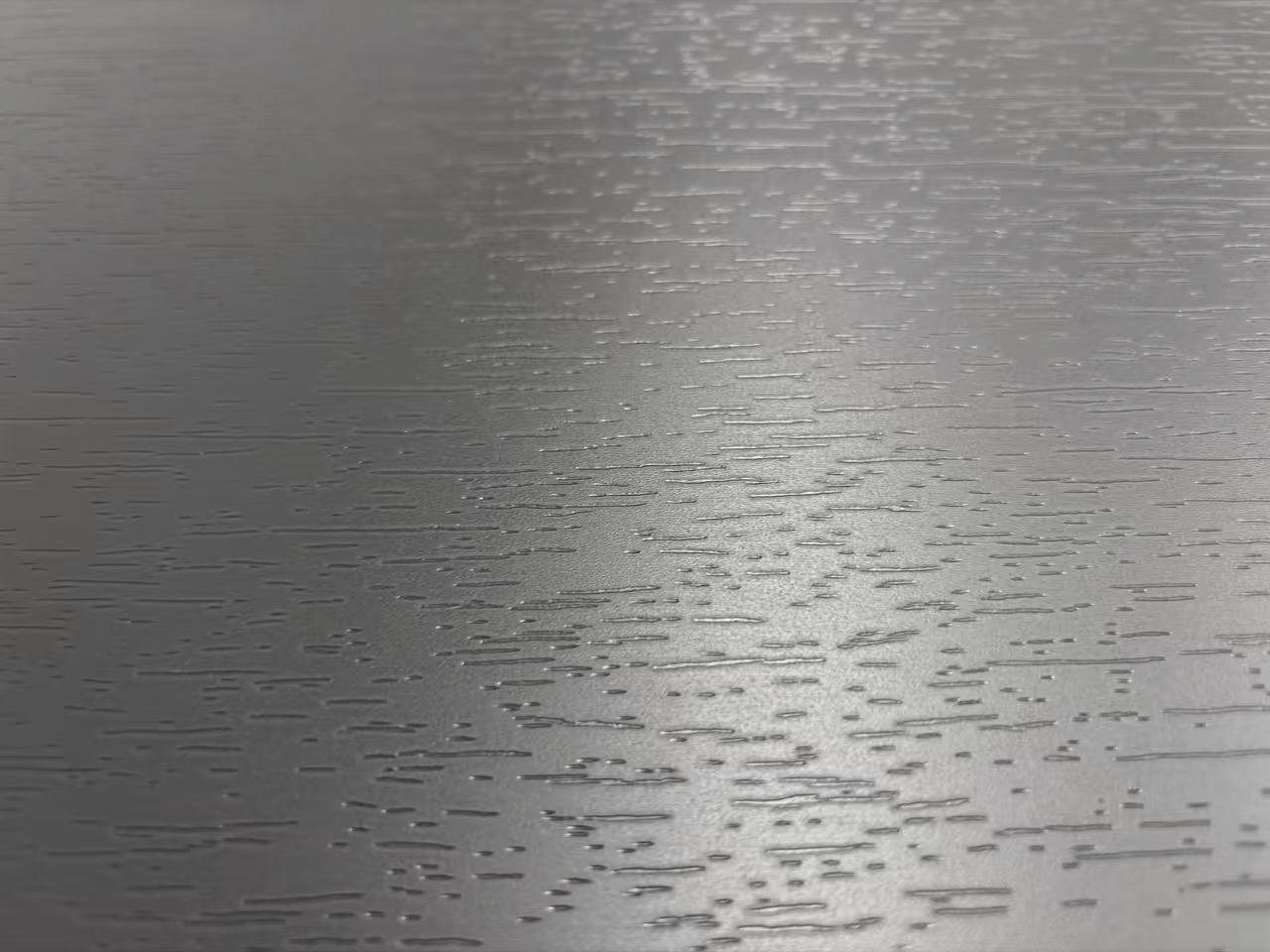
Crystal deep texture
A deeper crystal direction when the range needs a stronger tactile effect.
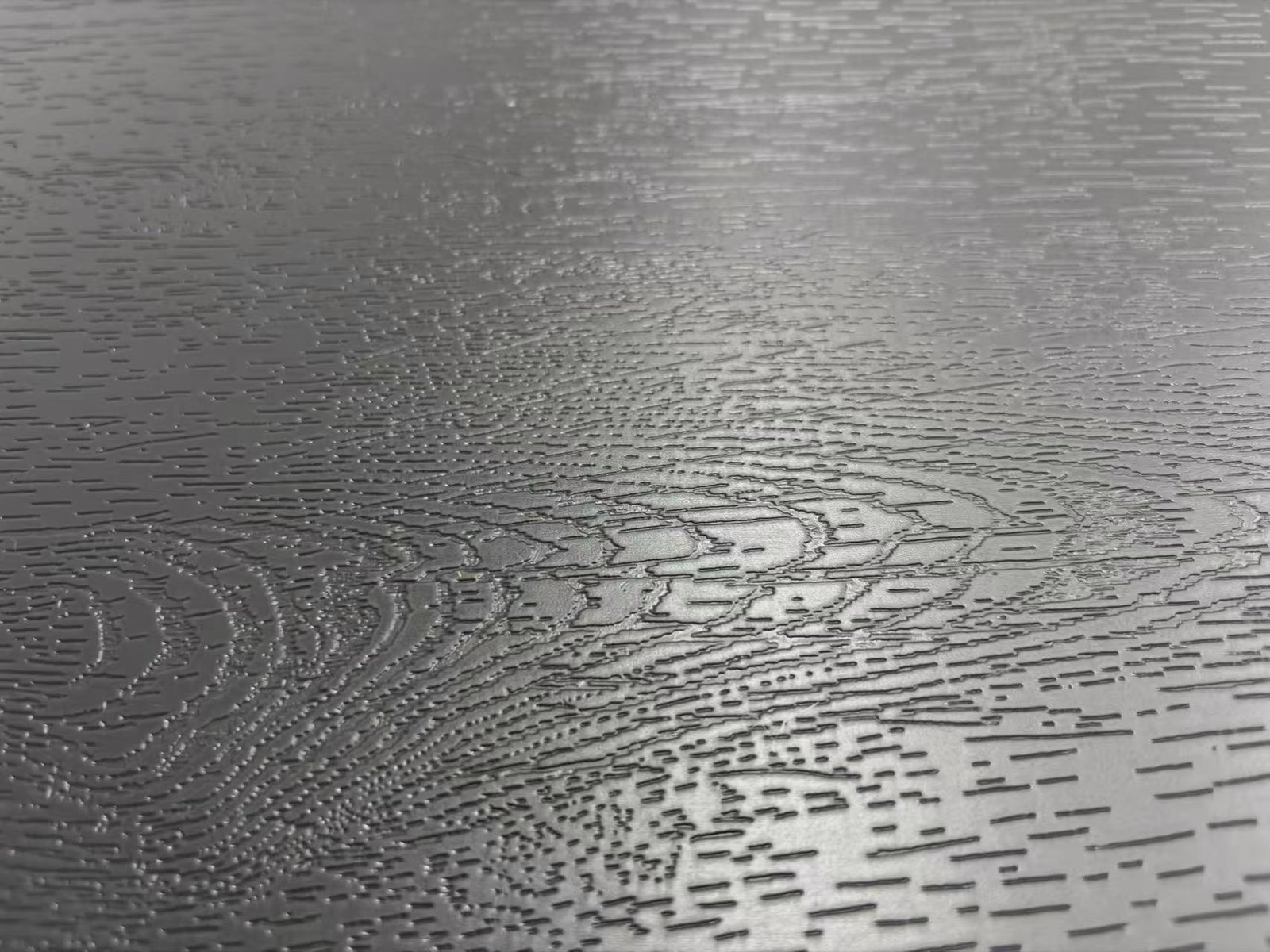
Natural wood texture
A wood-grain direction for oak, walnut and related wood-look collections.
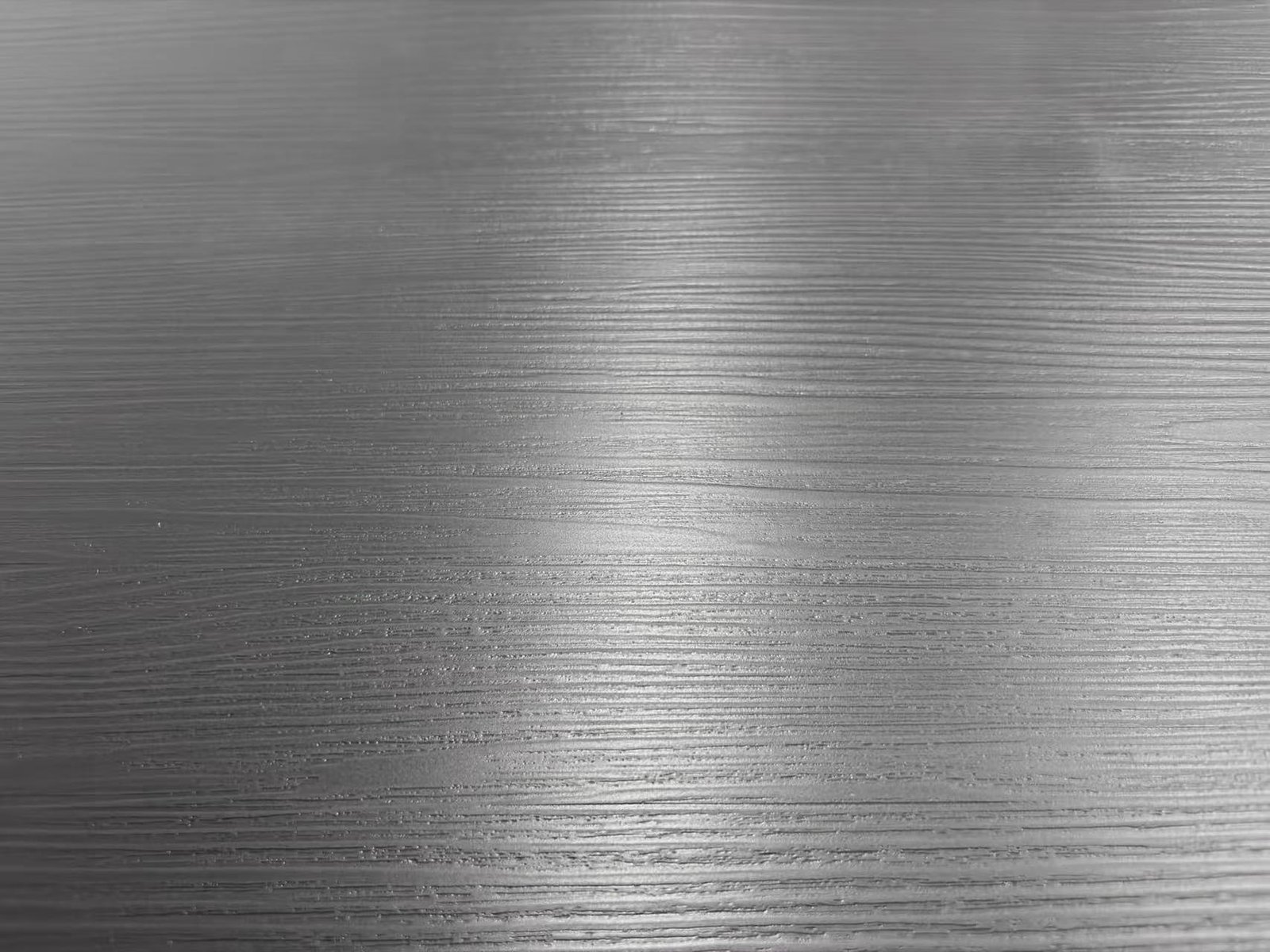
Basic pattern embossed light
A lighter embossed surface for a simple, broadly usable range direction.
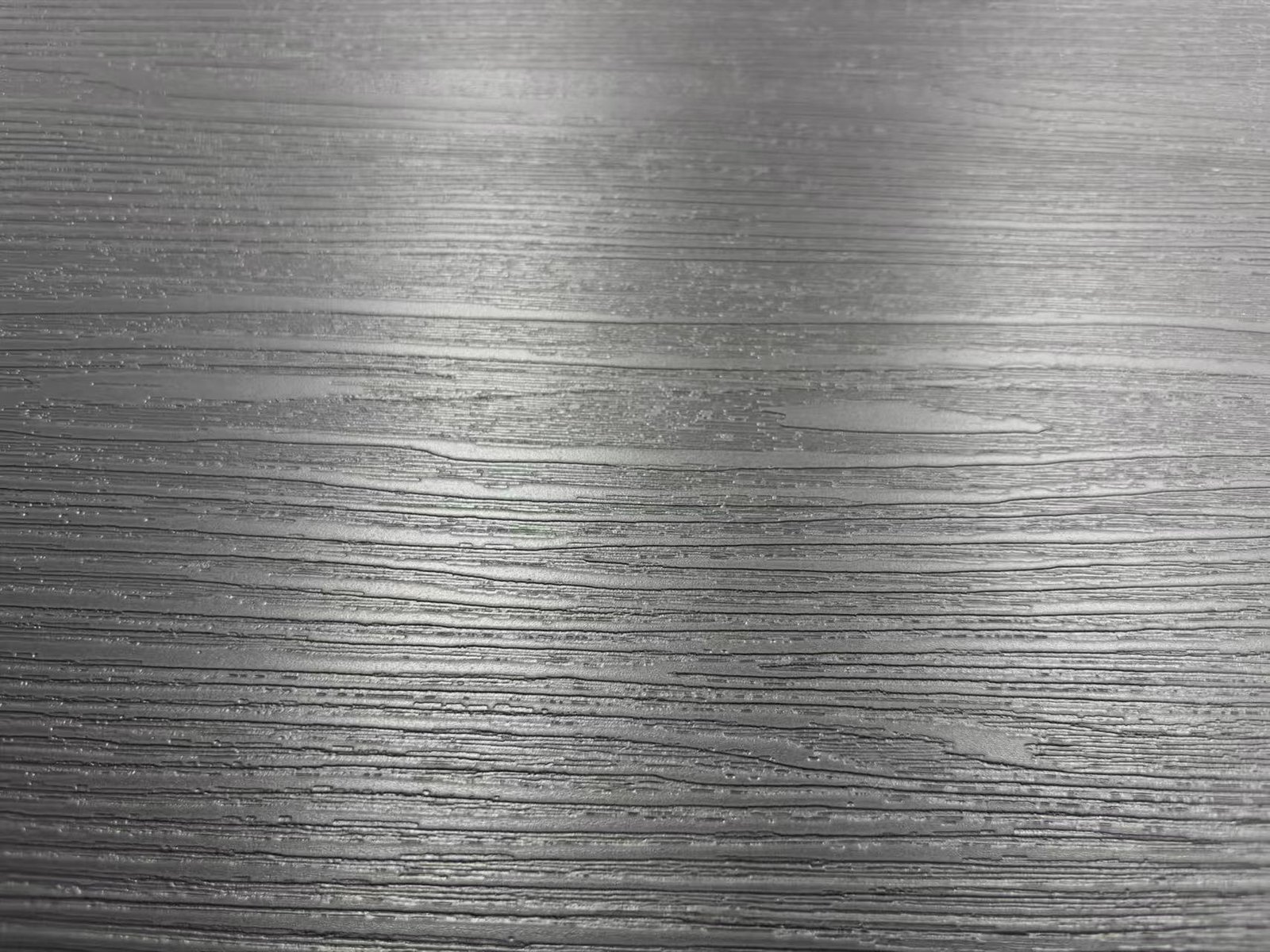
Basic pattern embossed deep
A deeper embossed surface for stronger touch and visible definition.
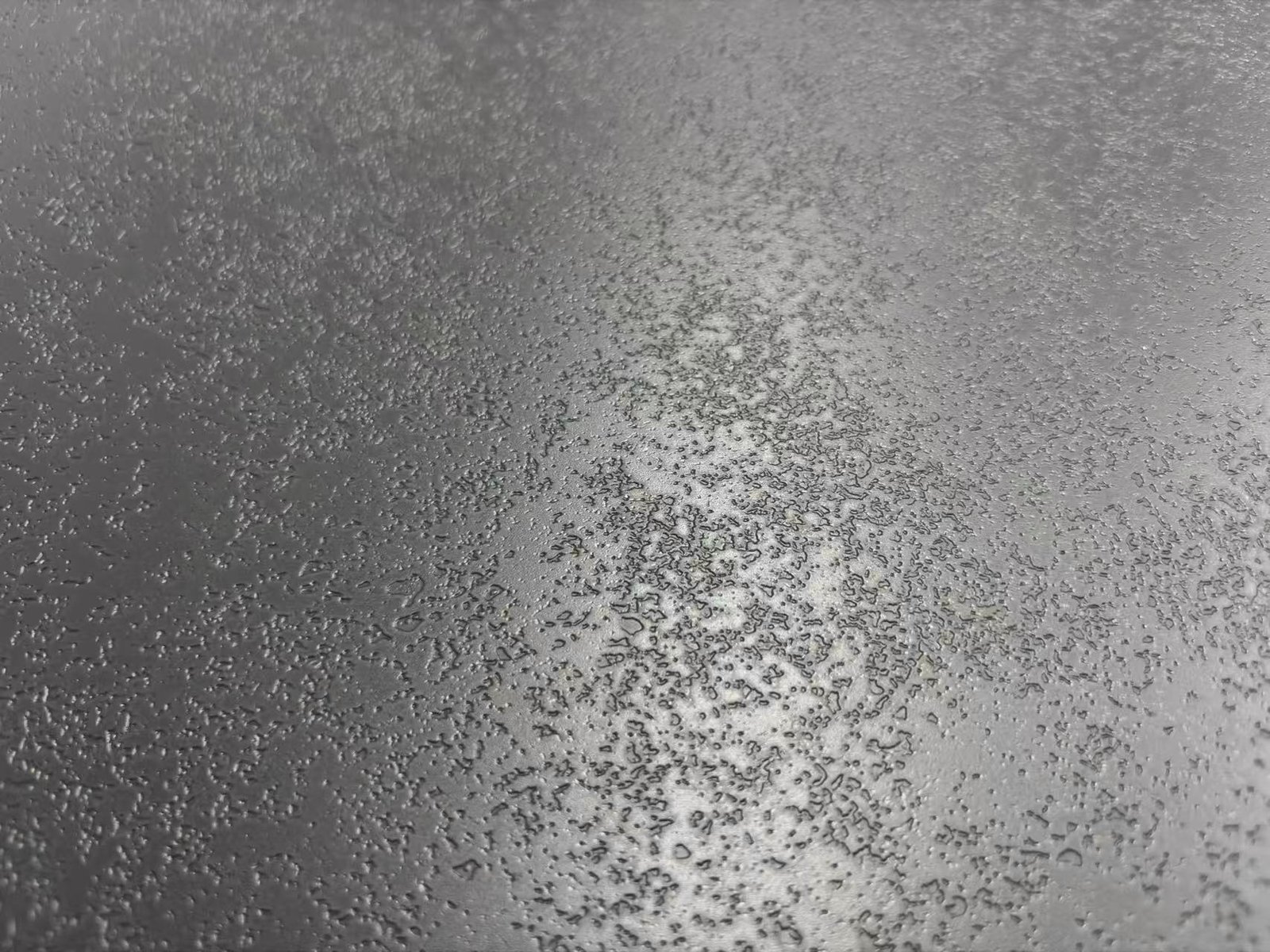
Coral texture
A decorative tactile direction for selected design-led collections.
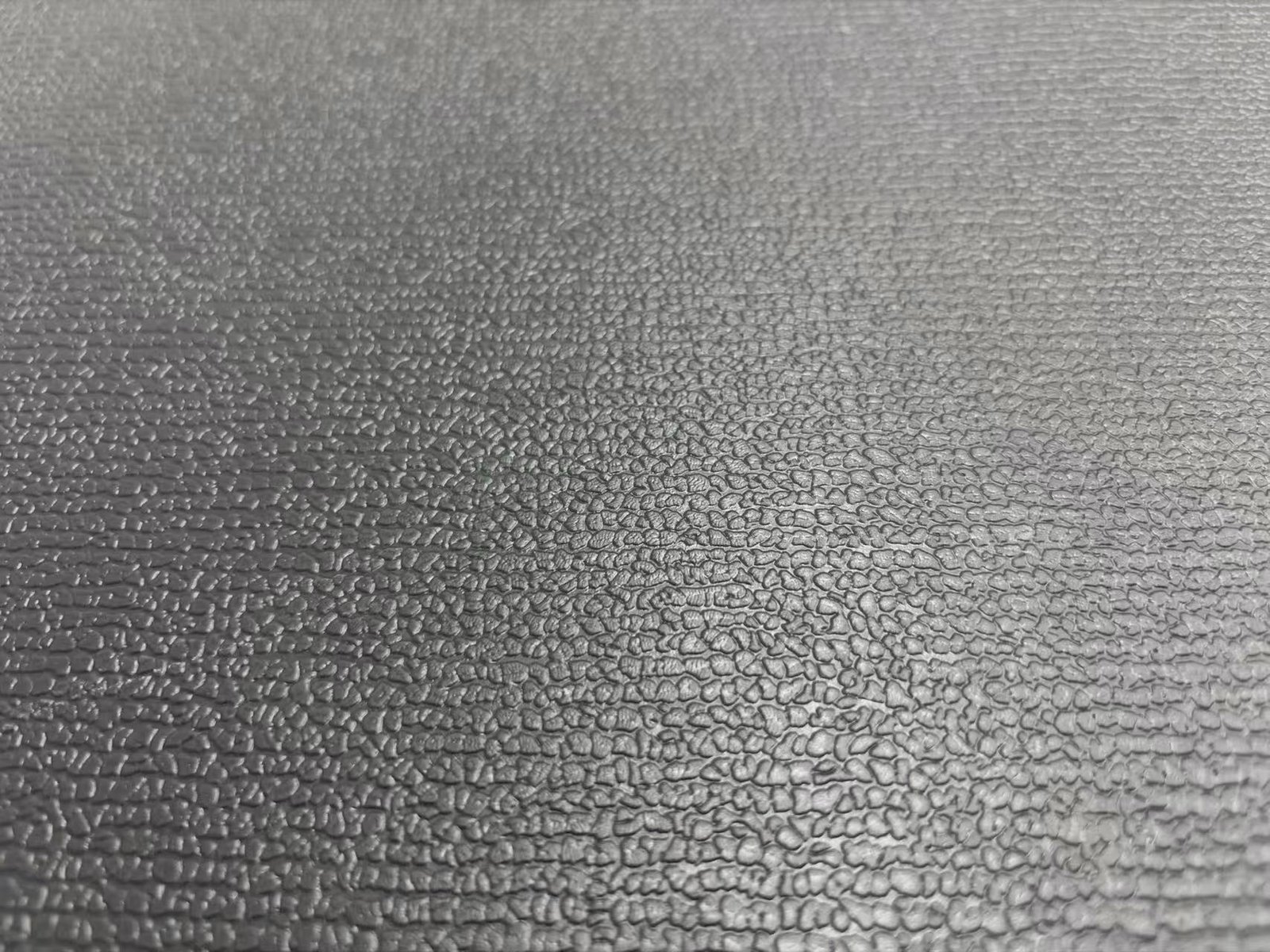
Captal texture
A specialist surface option for range differentiation and sample review.
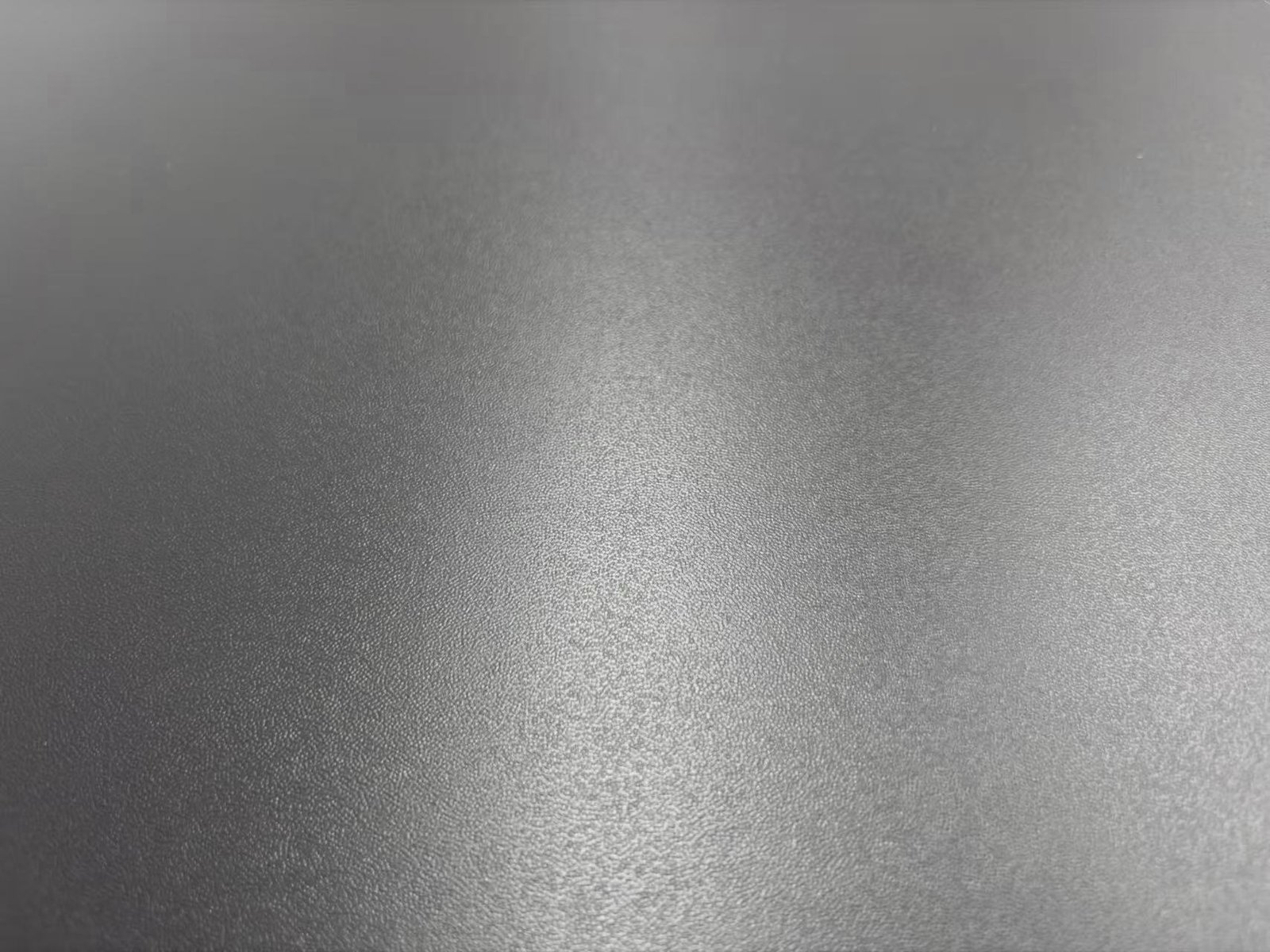
Leather texture
A leather-inspired direction for selected commercial or design programmes.
Related tile design routes

Stone-look tiles
Coordinate the tile format, mineral visual, surface, gloss and edge treatment.
View design route
Carpet-look tiles
A textile-look visual direction for office, hospitality and commercial ranges.
View design route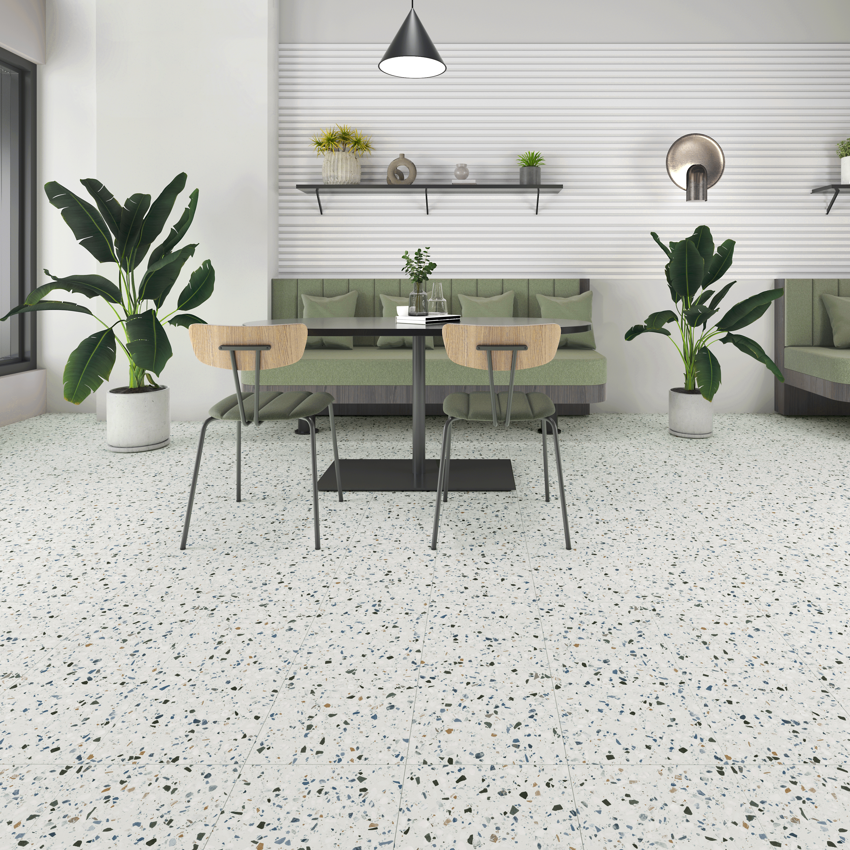
Terrazzo pattern
A speckled tile direction for retail, hospitality and design-led commercial ranges.
View design routeSample approval: images show design and texture directions rather than a guaranteed match for every Loose Lay SKU. Confirm the construction, size, wear layer, décor, texture, gloss and edge on the approved sample.
Packaging follows the approved Loose Lay SKU
Product, sample, label and sales material should describe the same construction, thickness, wear layer and market document responsibility.
Align the product and brand programme
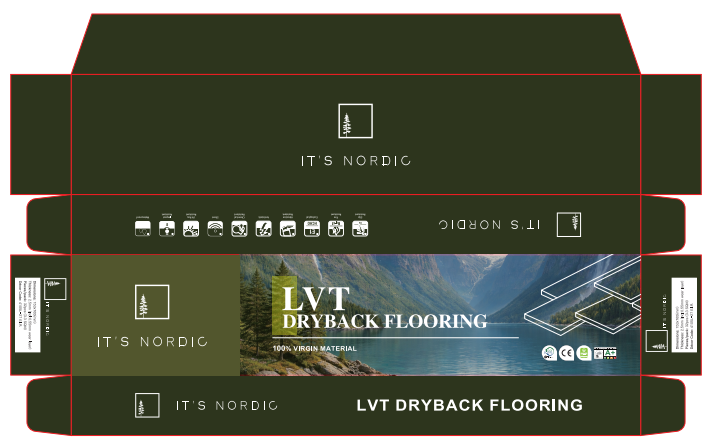
Approve the physical build first. Then prepare carton artwork, marks, labels, barcode data, sample boards and installation information around the order rather than treating packaging as a separate item.
- Brand and collection name
- Carton artwork and marks
- Labels and barcode data
- Sample board brief
- Installation guide responsibility
- Pre-production approval
- Existing programme
- From 800 m² per design / colour
- Custom development
- From 2,200 m²
- Production planning
- Typically 35–40 days after order and specification confirmation
- Samples
- Normally 7–14 days; courier cost by buyer
Final MOQ, timing and sample arrangement are confirmed in the quotation because construction, colour split, packaging and approval work can change the plan.
Continue with the page that owns the next decision
This Hub owns category comparison. Product pages hold the exact datasheet, packing and format detail.
Exact Loose Lay builds
Compare installation systems
Send the build, room and order brief
A useful quotation includes the product choices and the site conditions that may change the fixing plan.
- 4, 4.5 or 5 mm total thickness
- 0.55 or 0.70 mm wear layer
- Plank or tile size, décor and texture
- Room size, traffic, sunlight and substrate
- Required quantity and colour split
- Destination market and required documents
Need to check backing and surface first?
Request the target thickness, format, décor, texture and backing sample. Samples are normally prepared in 7–14 days; courier cost is paid by the buyer.
Request Loose Lay SamplesRequest a Loose Lay LVT quotation
If the fixing plan is still open, send the intended room, substrate, traffic, destination and approximate quantity. We can identify which product and installation details remain.
We use the information submitted through this form only to answer your request, check specifications, technical documents and commercial terms, and prepare samples or a quotation when requested. We do not use it for newsletters or marketing without separate consent. See our Privacy Policy. If drawings, specifications or tender documents are needed, we will request them by email after the first contact.
Email: sales@ecoflors.com · WhatsApp: +86 134 8633 9267