
SPC & vinyl flooring supplier for the Philippines: wholesale for importers, distributors and developers.
Six importer questions · Importing to the Philippines · Planks and tiles
Six questions Philippine importers ask,
answered directly.
Is an “SPC floor tile” the same as an SPC vinyl plank?
Usually, yes: the term covers SPC planks as well as tiles. Philippine listings often separate the flooring body from the attached pad, for example “4 mm body + 1.5 mm IXPE.” We state the flooring-body thickness, pad thickness and finished total separately. Available combinations are confirmed by SKU, so buyers do not compare a body-only figure with a finished total.
Form E or RCEP: which one do we claim?
China-origin flooring can qualify for a preferential rate under the ASEAN-China FTA, claimed with a Form E for that shipment, or under RCEP, in force for the Philippines since 2 June 2023. Your broker compares both against the MFN rate for the exact AHTN subheading. Tell us which scheme you will claim when you ask for a quotation, so the origin document is planned before loading.
Is import VAT charged on the CIF value only?
No. VAT on importation is 12 % of the value the Bureau of Customs uses to assess duty, plus customs duties, excise tax if any, and other charges before release (NIRC Section 107). A lower duty under Form E or RCEP therefore also lowers the VAT base slightly. Build your landed cost on that base, not on FOB or CIF alone.
What must be in place before the first container?
The importer of record needs current Bureau of Customs accreditation, and the goods declaration is lodged through a registered customs broker. Regular-importer accreditation is governed by CAO 07-2022, as amended by CAO 01-2026; customs-broker registration is governed separately by CAO 05-2019. Start this before the order ships and use the same accredited importer details on the commercial invoice, packing list and bill of lading.
Does a Bfl-s1 rating satisfy the Philippine Fire Code?
Not automatically. Floor finishes are reviewed under the Fire Code (RA 9514) and its revised IRR, through the BFP’s Fire Safety Evaluation Clearance and later the Fire Safety Inspection Certificate. Bfl-s1 is a European EN 13501-1 class for one tested build. Ask the project’s fire safety practitioner for the class and test method required, and we check which report, if any, covers your build.
SPC or WPC for humid sites?
We supply SPC, not WPC. The SPC core is a rigid mineral and PVC composite with no wood board inside. On Philippine sites the bigger risk is the slab: new concrete and screeds hold moisture. Measure it, keep the expansion gaps and acclimatise the boxes as the installation guide for the article says.
Importing vinyl flooring from China to the Philippines:
who confirms each point.
For an order from China, separate three levels: the product documents, the import process with the Bureau of Customs, and what each project or retail channel requires. We answer for the first. The other two are set by your customs broker, your accountant, and the project’s architect, fire safety practitioner or buyer.
Construction, thickness, wear layer, backing pad, fire, slip, stability and emissions reports.
Ecoflors documents, per buildAHTN classification, MFN or preferential duty, proof of origin, import VAT, importer and broker accreditation.
Importer and customs brokerFire class under RA 9514, the developer’s specification, labelling and product rules for retail chains.
Architect, BFP reviewer, buyer| Topic | Philippine position | What it means for your order | What Ecoflors provides |
|---|---|---|---|
| Classification | Heading 3918.10 is the starting reference for floor coverings of polymers of vinyl chloride. The AHTN subheading and its rate are published by the Tariff Commission. | Classification depends on material, construction and presentation; your broker confirms it per product before shipment. | Technical datasheet with the construction of each product. |
| Preferential origin | ACFTA claims use a Form E for the shipment; RCEP has applied to the Philippines since 2 June 2023. | Your broker picks the lowest valid rate for the subheading and checks the origin document before arrival. | State the scheme in your enquiry so the origin document is part of the quotation. |
| Import VAT | 12 % of the customs value plus duties, excise and other charges before release (NIRC Section 107). | Paid before release; whether you can credit it is for your accountant. | Commercial invoice FOB Shanghai. |
| Accreditation | Regular importers are accredited through the Bureau of Customs Accounts Management Office under CAO 07-2022, as amended by CAO 01-2026. Customs brokers are registered separately under CAO 05-2019. | Arrange accreditation before shipment. The importer details, quantities, weights and product descriptions must remain consistent across the commercial documents. | Commercial invoice and packing list for each shipment. |
| Labels for retail | Under Article 77 of the Consumer Act (RA 7394), retail packaging must carry the applicable particulars, including the registered trade or brand name, registered business name, Philippine address of the manufacturer, importer or repacker, general make or material, net quantity in metric units and country of manufacture. | Send the confirmed importer and retail-label data before artwork approval. Check the current DTI-BPS list of products under mandatory PS / ICC certification and the Philippine National Trade Repository for the confirmed product classification before shipment. | Box and label artwork confirmed before production. |
| Fire and project | Floor finish requirements follow RA 9514 and its revised IRR; BFP reviews at FSEC and FSIC stage. | Give us the class and test method the project needs before we quote. | Test reports listed below, with the build tested. |
Sources: Tariff Commission; NIRC Section 107 as amended by RA 9337; Bureau of Customs, Accounts Management Office; Bureau of Customs, RCEP guidelines (CMO 12-2023); Consumer Act, RA 7394; DTI-BPS, PS and ICC certification; BFP, revised IRR of RA 9514. General information, not tax or customs advice. Last reviewed: 5 October 2026.
Documents available
Importers and developers: each report covers only the build that was tested. Before the order we check whether the report matches the SKU, thickness, wear layer, surface and producing plant, and we tell you if it does not cover your build. Report and certificate numbers are sent on request, with their scope. Datasheets and reports are in English.
| Scheme or report | Build tested / scope | Result or validity | Note |
|---|---|---|---|
| EN 14041 type test (Intertek, January 2021) | One PVC floor covering build: multilayer with glass-fibre mesh, 2–10 mm total thickness | Reaction to fire Bfl; formaldehyde E1; slip class DS | Covers that build, not all SPC, LVT, ABA or wall panels. |
| Reaction to fire, EN 13501-1 (Intertek, July 2022) | SPC flooring, 4.0 mm total, 0.3 mm wear layer | Bfl-s1 | European class; tested build only. Not a Philippine Fire Code class. |
| Dimensional stability, ISO 23999 (Intertek, August 2022) | SPC 4.0 / 0.3 mm as described in the report, 6 h at 80 °C | 0.00 % average; 0.02 % highest single value | EN ISO 10582 limit: ≤ 0.25 %. |
| Slip resistance, DIN 51130 (Intertek, August 2022) | SPC surface described in the report | R10 · 12.6° angle | Tested surface only. |
| GREENGUARD Gold (UL 2818) | Certificate scope: click vinyl 3.2–7.0 mm; glue-down vinyl 2.0–7.0 mm. The certificate includes 3.2 mm in its documented scope, but 3.2 mm is not part of the current Ecoflors offer. | Valid until 7 January 2027 | Voluntary VOC scheme. Certificate scope does not indicate current product availability; applicability is checked by SKU, construction and producing plant. |
| EPD, EN 15804 (SCS Global Services) | SPC, LVT and PP flooring; European market scenario | Valid until 27 April 2031 | Voluntary; useful where a project scores environmental criteria. |
Reports and certificates are issued to the plant that makes the tested build. A report that matches your build supports the project file; on its own it does not mean every Philippine requirement is met. If a project asks for a document not listed here, such as a FloorScore certificate for a LEED project, name it in your enquiry and we confirm whether it covers your build. Scope: SPC and LVT certifications.
Planks, tiles and glue-down vinyl:
six builds in one enquiry.
Thickness, wear layer, m² per box and use class are set per SKU on the product page and in the datasheet. Here we only compare construction and installation.
Plank with a rigid mineral and PVC core, décor film and wear layer; what most Philippine stores call an SPC floor tile. For condominiums, housing projects, offices and shops.
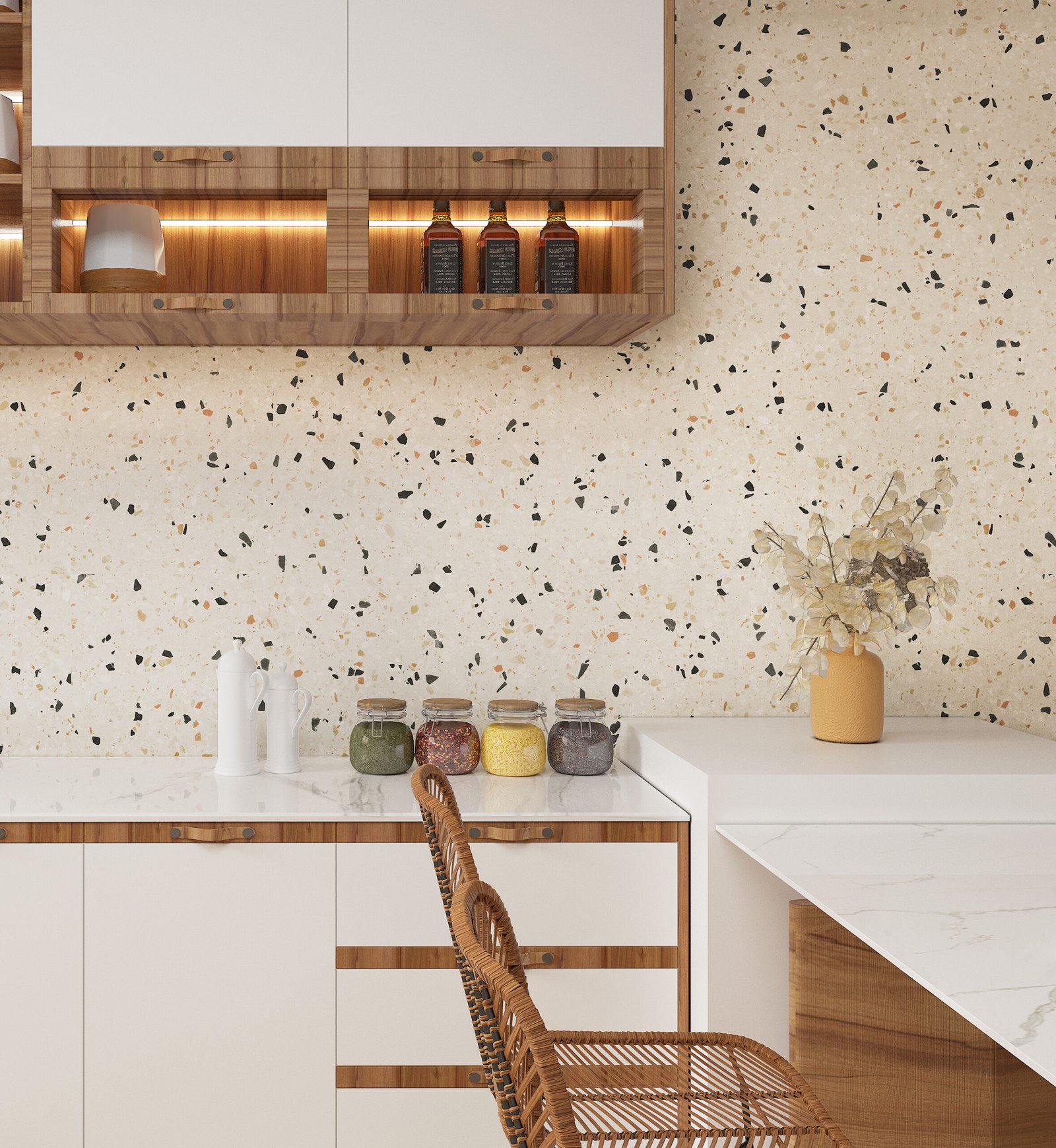
SPC core in tile format with stone, marble or terrazzo designs, for lobbies, offices and shops, subject to the project’s fire class and specification.
Flexible vinyl construction, softer underfoot than rigid SPC. For homes and hotel rooms where comfort matters.
Thin vinyl glued to a level slab. For hotels, malls, clinics and offices with heavy traffic, and for herringbone layouts.
Heavy flexible vinyl designed for loose lay installation and piece-by-piece replacement. Perimeter fixing or pressure-sensitive adhesive may be required depending on the selected product, room size, traffic and installation instructions.
SPC core with vinyl layers above and below, for buyers who want a rigid plank with a vinyl underside.
On site: floating floors need a flat, dry, sound slab or screed; glue-down floors also need a level surface suited to the adhesive. Check flatness and moisture as the installation guide for the article says, especially on new concrete. A rigid core does not correct an uneven or damp slab.
Herringbone, surface, wall panels and private label
Each option is confirmed per build in the quotation.
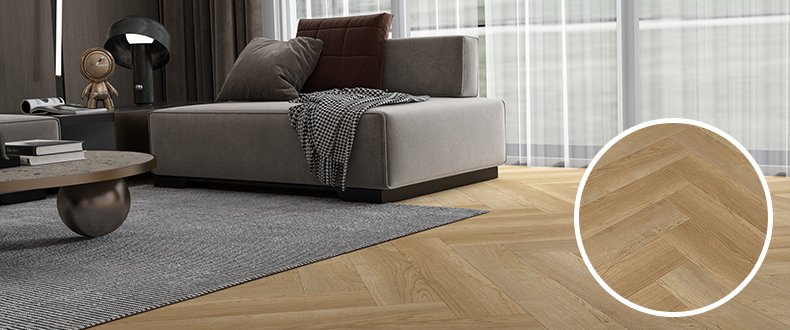
Herringbone
SPC click 110 × 610 mm and dryback LVT 153 × 765 mm, each with its own datasheet. In SPC click, A and B planks are packed in separate boxes.
Herringbone formats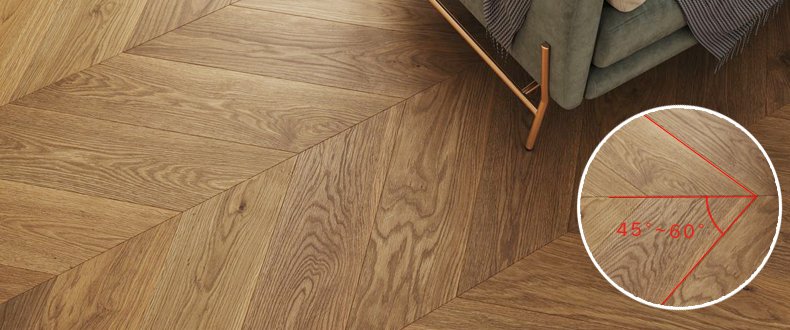
Chevron
Angle-cut ends so the planks meet in a continuous point. Sizes depend on the build and the project.
Chevron formats
SPC wall panels
For interior walls, depending on the panel, the substrate and the fixing method. Ask for floor and wall in one enquiry; the loading plan shows what fits in one container.
SPC wall panels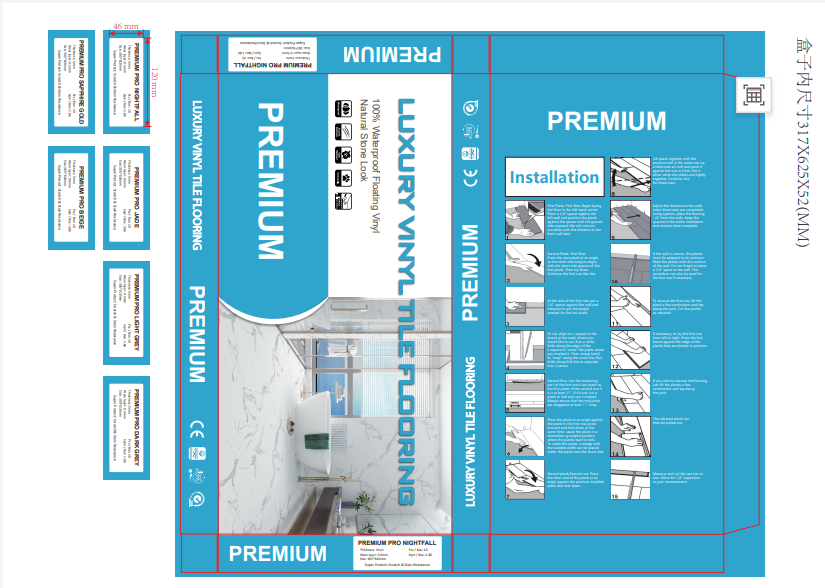
Private label (OEM)
Your brand, box and label from 2,200 m² per custom design or colour. Send the data the box must carry for Philippine retail; we confirm what we can print before production.
OEM and private label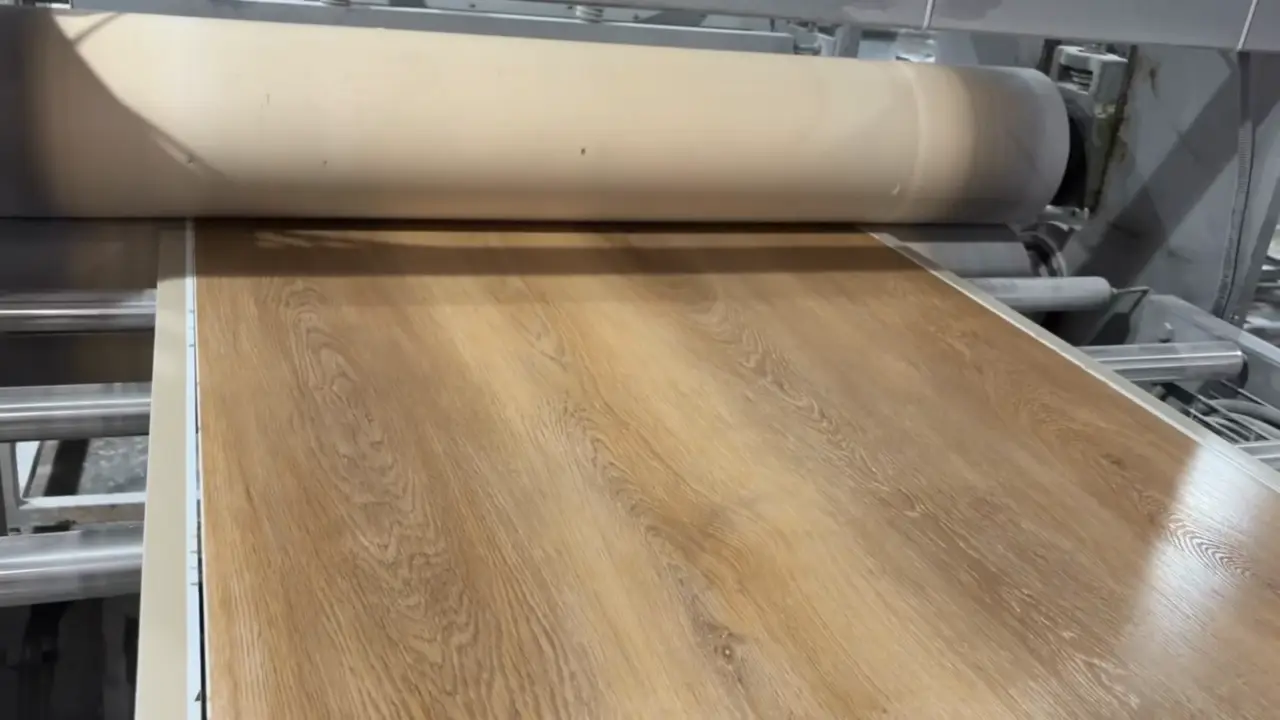
Production line
SPC from our main factory in Jiaxing. Normal production takes 35 to 40 days; the quotation gives the plan and the loading date. The photo shows production, not a test result.
About Ecoflors| Topic | What we need from you |
|---|---|
| Quantity | m² per SKU, or the project total if designs are still open |
| Thickness | Flooring-body thickness, backing-pad thickness and required finished total. Available combinations are confirmed by SKU. |
| Target date | Date at your warehouse or site; sea transit is added to production |
| Freight | Your forwarder and port of discharge, for example Manila, Cebu or Davao |
| Customs | Accredited consignee, broker, AHTN code and Form E or RCEP claim |
| Boxes and labels | Importer details, brand and label content for retail shelves |
| Project | Fire class and test method, or the developer’s specification |
Step by step: importing SPC flooring from China to the Philippines.
Philippine guides and technical support
Request quotation
and lead time.
To start, we only need your company name, a business contact and what you need. Leave open anything you have not decided yet.
Market: Philippines. Fields you have not decided yet can stay empty.
We use the details in this form only to answer your enquiry, review specifications, technical documents and commercial terms, and prepare samples or quotations when you ask for them. We do not use them for newsletters or marketing without separate consent.
This form does not accept attachments. If we need specifications, drawings or tender documents, we ask for them by email after the first contact.
Privacy policy: ecoflors.com/privacy-policy.
General information for trade buyers. AHTN classification, duty rates, import VAT and customs procedures in the Philippines can change; confirm them with your customs broker and accountant before each shipment. Test results apply to the samples tested; whether they apply to an order is confirmed by comparing the build, the SKU and the plant.