
Herringbone · Click and glue-down
Herringbone Vinyl Plank Flooring (SPC, Click LVT & Dryback LVT)
Herringbone vinyl plank is a short rectangular board with square ends, laid at alternating 90° angles so each board end meets the side of the next. We make it as click boards and as glue-down boards. Click: SPC rigid core at 5, 6, 7 and 8 mm in 110 × 610 mm and 150 × 750 mm, and flexible-core click LVT at 4, 4.5 and 5 mm in 110 × 610 mm, both supplied as A and B boards. Glue-down: Dryback LVT at 2.5 and 3 mm in 153 × 765 mm.
- Datasheet per build and format
- Own-brand and private-label orders
- Sample kits on request
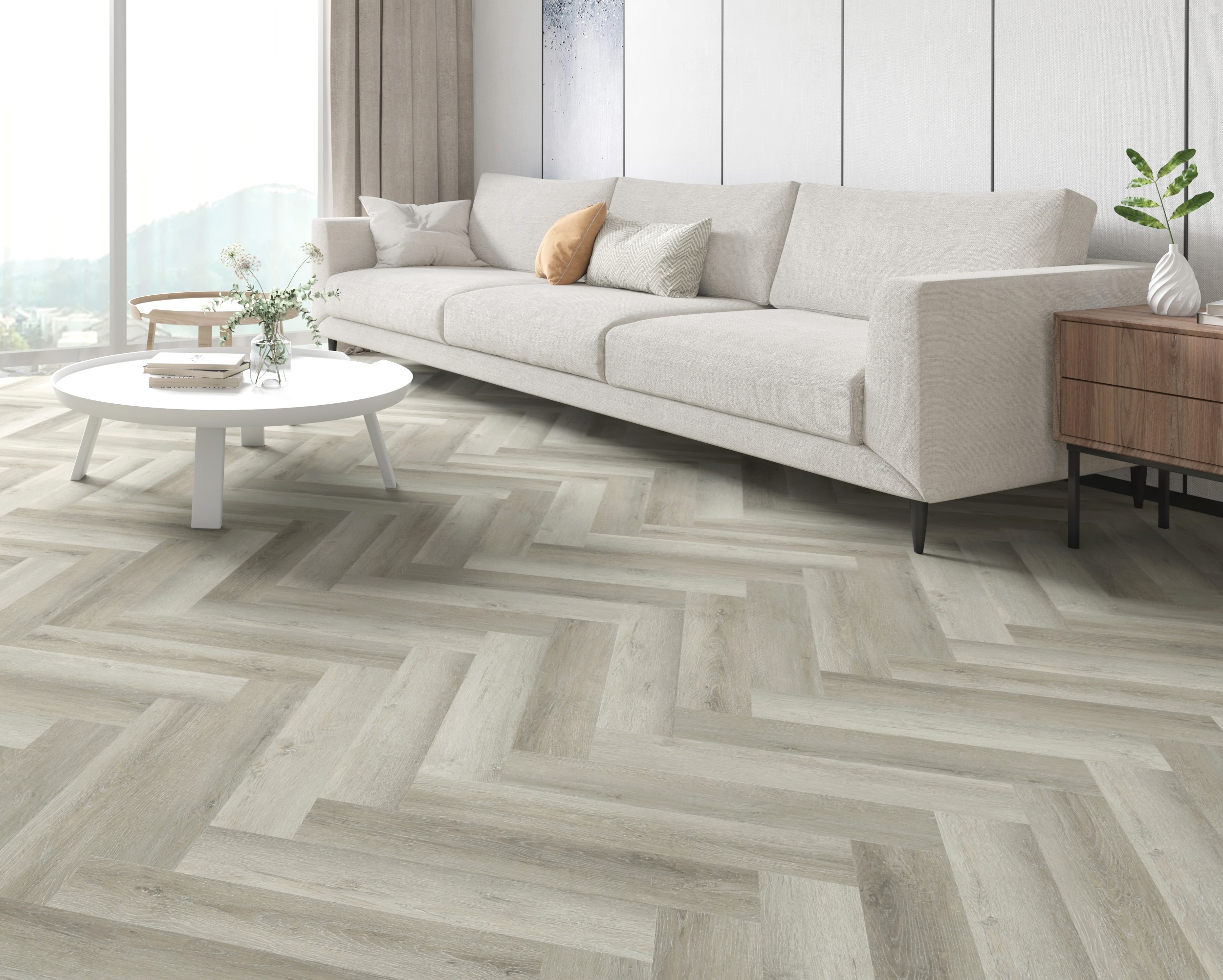
- Herringbone sizes
- 110 × 610 · 150 × 750 · 153 × 765 mm
- Click builds
- SPC 5–8 mm · LVT 4–5 mm
- Glue-down build
- Dryback LVT 2.5 · 3 mm
- Made in Jiaxing, ChinaOur factory in Jiaxing runs the SPC and LVT lines that produce these boards, click and glue-down. About Ecoflors
- Values tied to a test methodEvery figure on this page names its datasheet and, where it is a test value, the standard.
- Documents per SKUReports and certificates are matched to the build, format and market you are quoting.
- Your brand or oursPrivate-label cartons and labels, with conditions confirmed per order.
Start with the build
Which Herringbone Build Fits Your Range?
Herringbone is a format, not a product. The build under the pattern decides thickness, weight, wear layers, how the floor is fixed and the documents behind it. Choose click or glue-down first, then the build, then the size.
-
SPC Herringbone
Rigid core with a 1.0 mm IXPE underlay attached and counted in the total. Both herringbone sizes.
Total thickness5 · 6 · 7 · 8 mmWear layer0.30–0.70 mm by buildSizes110 × 610 · 150 × 750 mmPackingA and B separate -
Click LVT Herringbone
Flexible core with a fibreglass layer inside and no attached underlay. Thinner and lighter than SPC.
Total thickness4 · 4.5 · 5 mmWear layer0.30 or 0.50 mmSize110 × 610 mmA/B arrangementPer SKU -
Dryback LVT Herringbone
Flexible LVT glued board by board to a prepared substrate. No locking profile, no fibreglass layer, no attached underlay.
Total thickness2.5 · 3 mmWear layer0.30–0.70 mm by buildSize153 × 765 mmJointGlue-down -
ABA Herringbone
Vinyl layers above and below an SPC core, often sold as hybrid. One herringbone size.
Total thickness4.5 · 5 · 6 · 7 · 8 mmWear layer0.2–0.7 mmSize110 × 610 mmValuesDesign values
SPC and click LVT from the Ecoflors TDS, version 2026.09.23-R01. Dryback from the 2.5 mm and 3 mm Dryback TDS (3 mm: version 2026.09.09-R01). ABA from the Ecoflors product datasheet, ABA column: design values, not third-party test results.
Sizes and builds
Herringbone Sizes by Build
Three herringbone sizes are on our current datasheets. A “Yes” means the size is on the datasheet for that build. Click herringbone runs in wood-grain texture, with EIR or crystal embossing; the 2.5 mm Dryback herringbone is embossed in register.
| Build | 110 × 610 mm (4.33 × 24.02 in) | 150 × 750 mm (5.91 × 29.53 in) | 153 × 765 mm (6.02 × 30.12 in) | Wear layers on the datasheet |
|---|---|---|---|---|
| SPC rigid core click (core + 1.0 mm IXPE) | ||||
| 5 mm SPC (4.0 + 1.0 mm) | Yes | Yes | No | 0.30 or 0.50 mm |
| 6 mm SPC (5.0 + 1.0 mm) | Yes | Yes | No | 0.50 or 0.55 mm |
| 7 mm SPC (6.0 + 1.0 mm) | Yes | Yes | No | 0.55 or 0.70 mm |
| 8 mm SPC (7.0 + 1.0 mm) | Yes | Yes | No | 0.55 or 0.70 mm |
| Click LVT, flexible core | ||||
| 4 mm click LVT | Yes | No | No | 0.30 mm |
| 4.5 mm click LVT | Yes | No | No | 0.30 or 0.50 mm |
| 5 mm click LVT | Yes | No | No | 0.30 or 0.50 mm |
| Dryback LVT, glue-down | ||||
| 2 mm Dryback | No | No | No | 0.30 mm. Herringbone not on the current 2 mm datasheet; ask |
| 2.5 mm Dryback | No | No | Yes | 0.30, 0.50 or 0.55 mm |
| 3 mm Dryback | No | No | Yes | 0.55 or 0.70 mm, confirmed per format |
| ABA (vinyl above and below an SPC core) | ||||
| 4.5 to 8 mm ABA | Yes | No | No | 0.2 to 0.7 mm |
The SPC, click LVT and ABA datasheets declare no utilisation class on any wear layer. On Dryback the class depends on the wear layer and is confirmed for the exact SKU. If your specification names a class, send it with the build and we check what the SKU can be documented to before it goes on a submittal.
A and B boards
A/B Boards, Glue-Down and How to Order
A and B are the two handed versions of the same board. Their click profiles are mirrored, so in the alternating pattern an A board always locks against a B board. The pattern needs both, and a floor laid from one hand alone does not close.
On our SPC herringbone, A and B are packed in separate cartons. On click LVT and ABA herringbone the carton arrangement is stated per SKU in the quotation. The click system is also named per SKU: on SPC it is Uniclic®, i4F or G2, produced under licence.
For the pattern itself, the board’s squareness and length tolerance matter more than in a straight-lay floor, because every board end sits against the side of another board. The tolerances we declare are in the technical table.
Dryback herringbone has no locking profile. Each board is glued to the prepared substrate, so the pattern is held by the adhesive bed rather than by a joint. How the boards are labelled and packed is confirmed per SKU in the quotation, and the adhesive and substrate requirements come with the installation instruction.
Ordering herringbone, step by step
Choose the build and size
Click (SPC, click LVT, ABA) or glue-down (Dryback), then the size the build offers.
Order A and B in equal quantities
On click herringbone, unless your layout plan says otherwise. Each decor is its own SKU for the minimum order.
Add the cutting allowance
Set by your installer from the room plan and setting-out. We don’t publish a waste percentage.
Confirm the joint
Click system named per SKU, or glue-down for Dryback, so the installation instruction matches the boards.
Substrate flatness, moisture limits, expansion gaps and acclimatisation are set in the installation instruction for the SKU and joint, click or glue-down, which we send with the order. We don’t publish one set of figures for every build here.
Packing and loading
Herringbone Cartons & Container Loading
Herringbone carries less floor per container than plank in most builds, and the gap widens with thickness. At 8 mm the 110 × 610 mm herringbone loads about 1,237 m² per 20 ft GP against about 1,701 m² for the 150 × 750 mm size. If the design allows either size, ask for both in the quotation. The thinner 2.5 mm Dryback herringbone loads about 4,850 m², the most of any herringbone we make.
| Build and size | Pcs per carton | Coverage per carton | Carton gross weight | Cartons per pallet | Pallets per 20 ft GP | Est. coverage per 20 ft GP |
|---|---|---|---|---|---|---|
| 5 mm SPC · 110 × 610 mm | 24 | 1.610 m² | 13.54 kg | 64 | 24 | ≈2,474 m² |
| 5 mm SPC · 150 × 750 mm | 25 | 2.812 m² | 23.28 kg | 48 | 21 | ≈2,835 m² |
| 6 mm SPC · 110 × 610 mm | 24 | 1.610 m² | 16.77 kg | 48 | 24 | ≈1,855 m² |
| 6 mm SPC · 150 × 750 mm | 20 | 2.250 m² | 23.23 kg | 48 | 21 | ≈2,268 m² |
| 7 mm SPC · 110 × 610 mm | 24 | 1.610 m² | 19.99 kg | 48 | 24 | ≈1,855 m² |
| 7 mm SPC · 150 × 750 mm | 17 | 1.912 m² | 23.64 kg | 48 | 21 | ≈1,928 m² |
| 8 mm SPC · 110 × 610 mm | 24 | 1.610 m² | 23.21 kg | 32 | 24 | ≈1,237 m² |
| 8 mm SPC · 150 × 750 mm | 14 | 1.575 m² | 22.71 kg | 60 | 18 | ≈1,701 m² |
| 4 mm click LVT · 110 × 610 mm | 46 | 3.086 m² | 23.96 kg | 48 | 21 | ≈3,111 m² |
| 4.5 mm click LVT · 110 × 610 mm | 40 | 2.684 m² | 23.45 kg | 48 | 21 | ≈2,705 m² |
| 5 mm click LVT · 110 × 610 mm | 36 | Pallet and container figures on the 5 mm click LVT datasheet page | ||||
| 2.5 mm Dryback · 153 × 765 mm | 36 | 4.213 m² | 20.51 kg | 72 | 16 | ≈4,850 m² |
| 3 mm Dryback · 153 × 765 mm | Packing confirmed with the order. The 3 mm datasheet carries packing for the 184.15 × 1219.2 mm plank only | |||||
Road weight limits at some destinations, including many North American inland routes, sit below the 25,000 kg basis. We recalculate for your port and inland route before quoting a container quantity, and a load that mixes herringbone with plank is calculated from its actual split, not read off one row.
Technical performance
Datasheet Values for SPC & Dryback Herringbone
Our four SPC datasheets declare the same values at 5, 6, 7 and 8 mm, for both herringbone sizes and every wear layer. The 2.5 mm Dryback datasheet declares one set of values for all its formats, the herringbone included. Click LVT values are on each click LVT build page, and 3 mm Dryback values on the 3 mm Dryback page. If a test isn’t listed, we haven’t published a result for this build.
SPC and Dryback datasheet values
| Property | SPC herringbone | 2.5 mm Dryback herringbone | Method |
|---|---|---|---|
| Dimensional tolerance | Length and width within ±0.50 mm | Length and width within ±0.50 mm | ISO 24342 |
| Squareness | ≤0.15 mm | ≤0.20 mm | ISO 24342 |
| Straightness | ≤0.15 mm | ≤0.20 mm | ISO 24342 |
| Dimensional stability | ≤0.12 % | ≤0.12 % | ISO 23999:2021 |
| Curling | ≤1.0 mm | ≤1.2 mm | ISO 23999:2021 |
| Residual indentation | ≤0.10 mm | ≤0.10 mm | ISO 24343-1:2007 |
| Castor chair | No visible damage after 25,000 cycles | No visible damage after 25,000 cycles | ISO 4918:2016 |
| Abrasion group | Group P | Group P | EN 660-2 |
| Density | 1.95–2.05 g/cm³ (SPC core) | 1.75–1.90 g/cm³ | ISO 23996:2007 |
| Flexibility | Not applicable, rigid core | No cracking, 50 mm mandrel | ISO 24344:2008, Method A |
| Surface and edge | UV-cured matte, 4–6 GU. 4-sided micro bevel or printed V-bevel | UV-cured matte, 4–6 GU. 4-sided micro bevel | Datasheet |
Fire, slip and emissions
These are not published here as range-wide ratings. A report covers the construction, thickness, wear layer and decor that was tested, so we match documents to the SKU you are quoting and the market it ships to. Tell us the standard your specification names, for example a fire class under EN 13501-1 or a slip rating, and we’ll say what we hold for that build and what we don’t. Current certificates are on our certifications page.
Pattern choice
Herringbone or Chevron: What Changes
The two patterns are often confused on price lists. The difference is in the board end, and it changes what you order.
Rectangular boards with square ends, laid at alternating 90° angles. The end of each board meets the side of the next, giving a stepped zig-zag.
This is the pattern on this page and on our current datasheets. Click versions come as A and B boards; Dryback is glued.
Boards with angled ends that meet point to point, giving a continuous V along the room.
A different board, cut differently. See chevron vinyl flooring, and the herringbone vs chevron guide for the layout comparison.
Decors
Herringbone Decors
Twelve wood decors from our RW-D herringbone layouts. The images are layout renders, not installed floors, so judge colour from a sample rather than a screen. Which build, size and wear layer each decor runs in is confirmed against your colour list in the quotation.
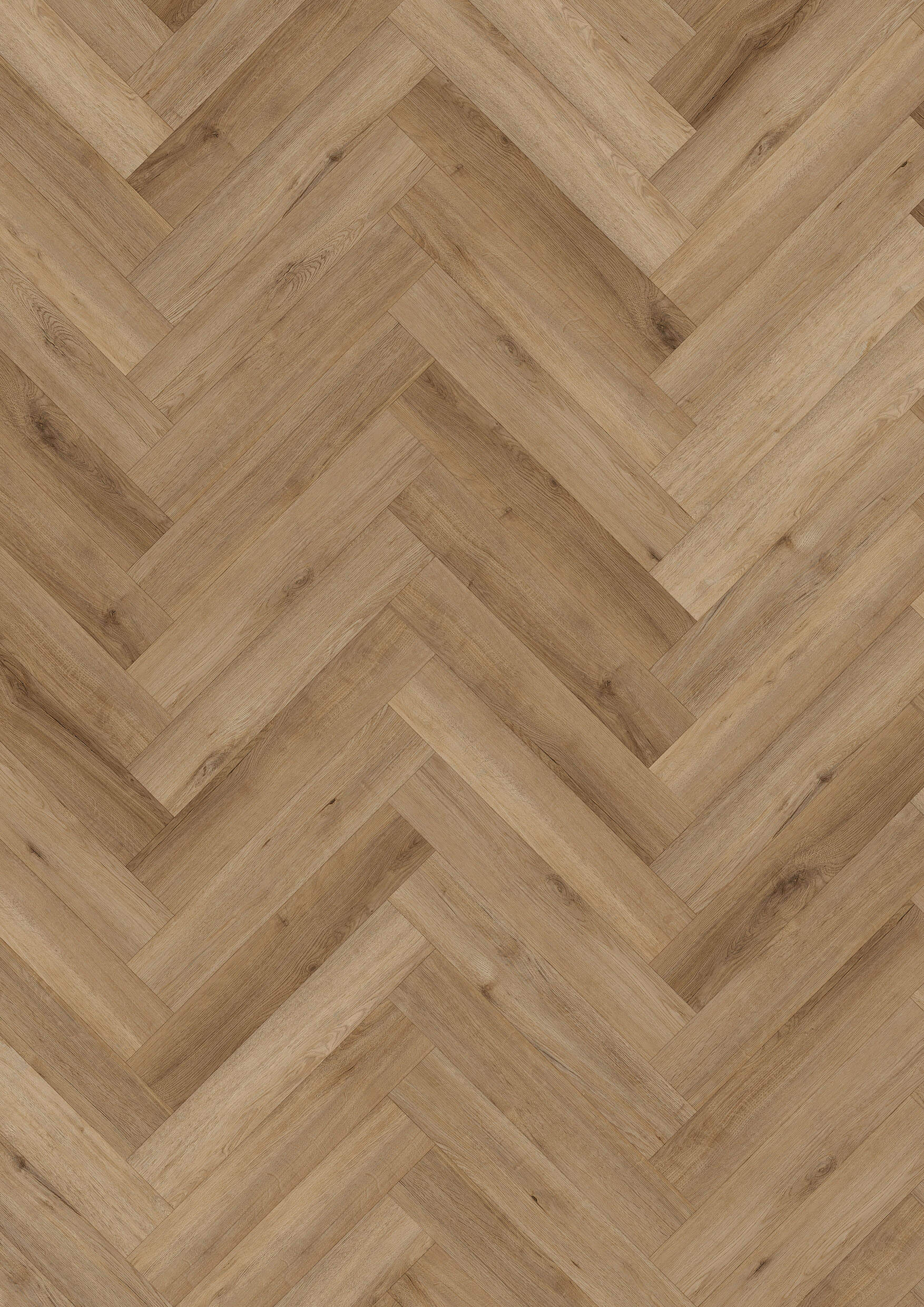 RW-D-771-D01Herringbone
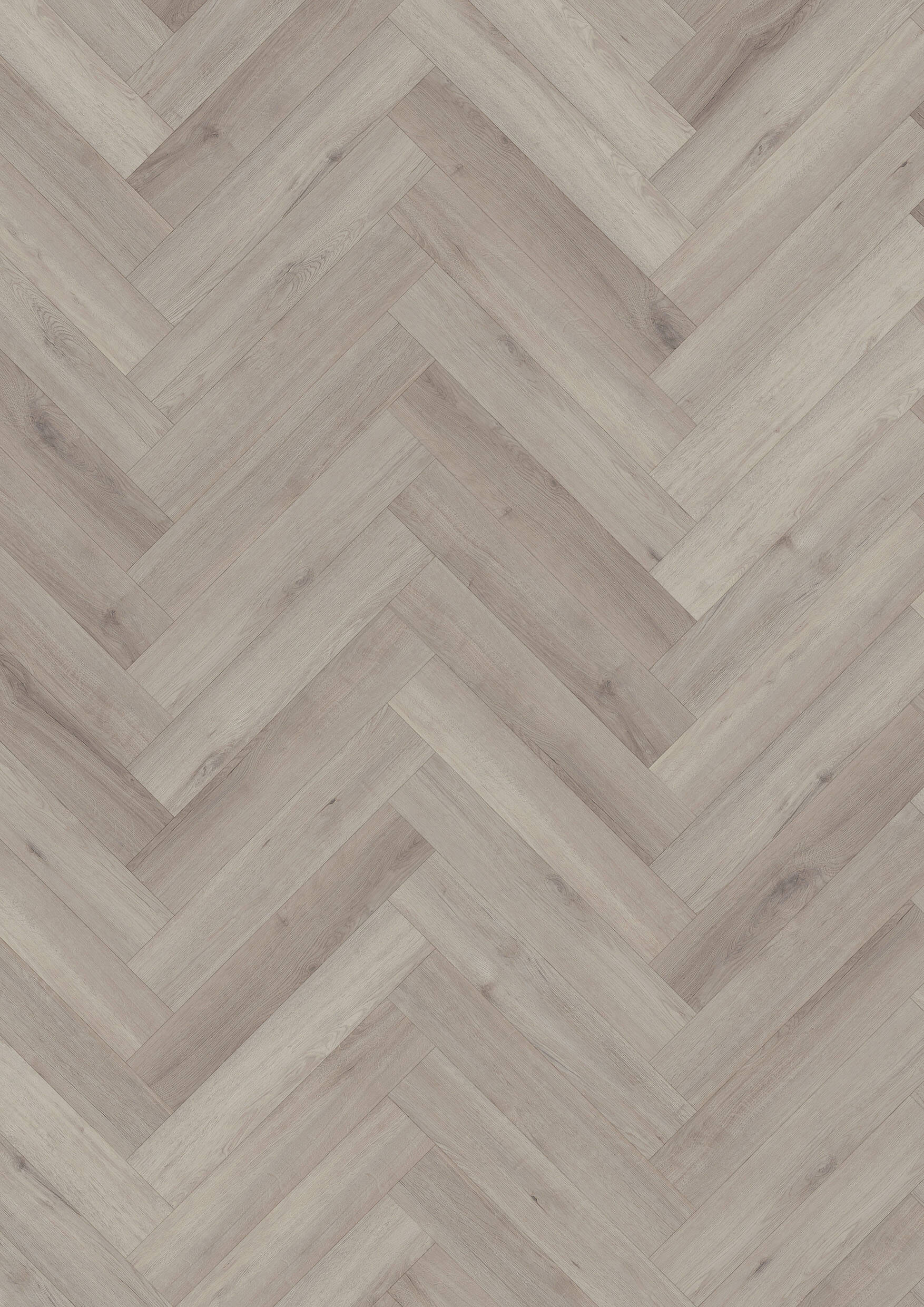 RW-D-771-D02Herringbone
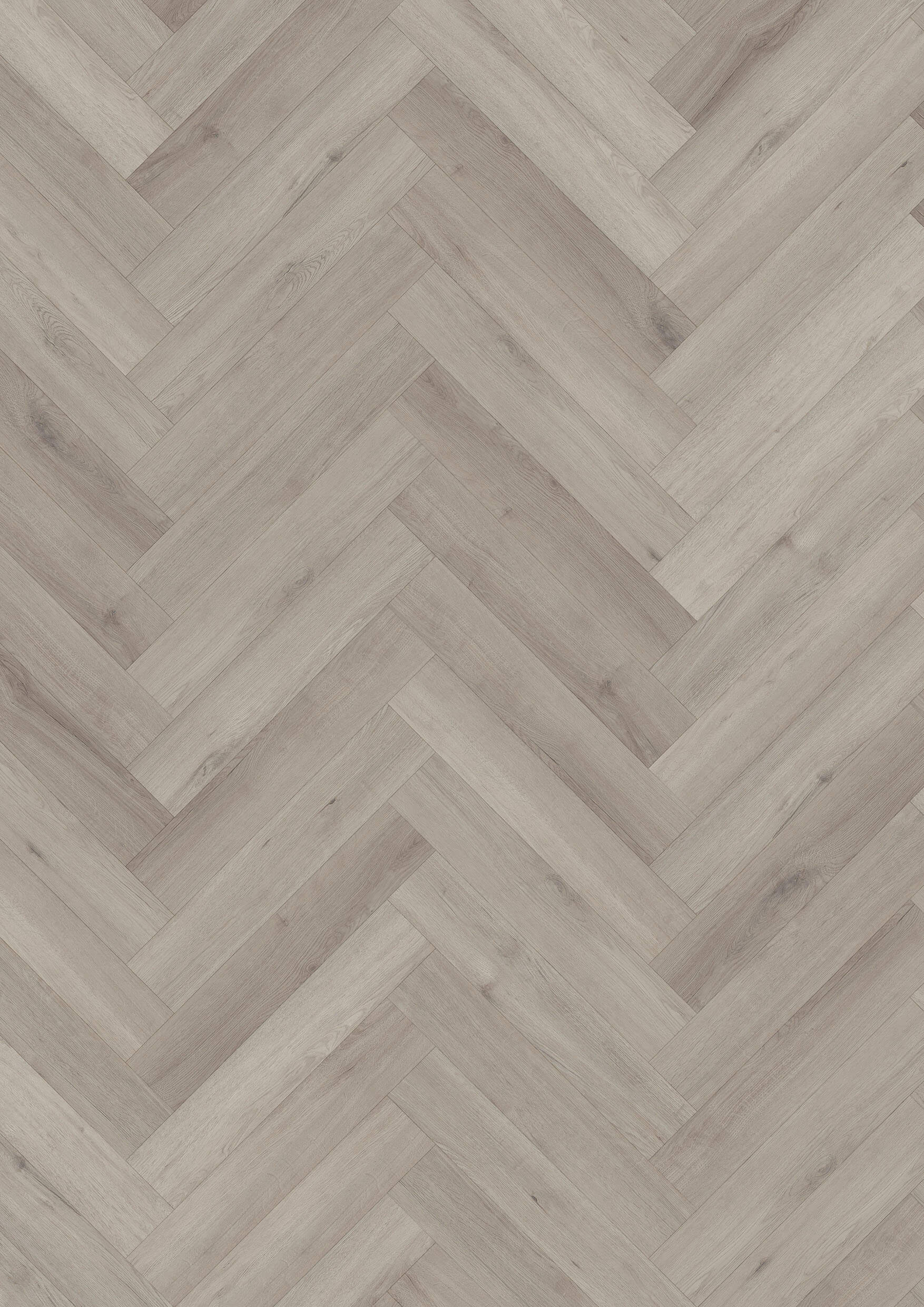 RW-D-771-D03Herringbone
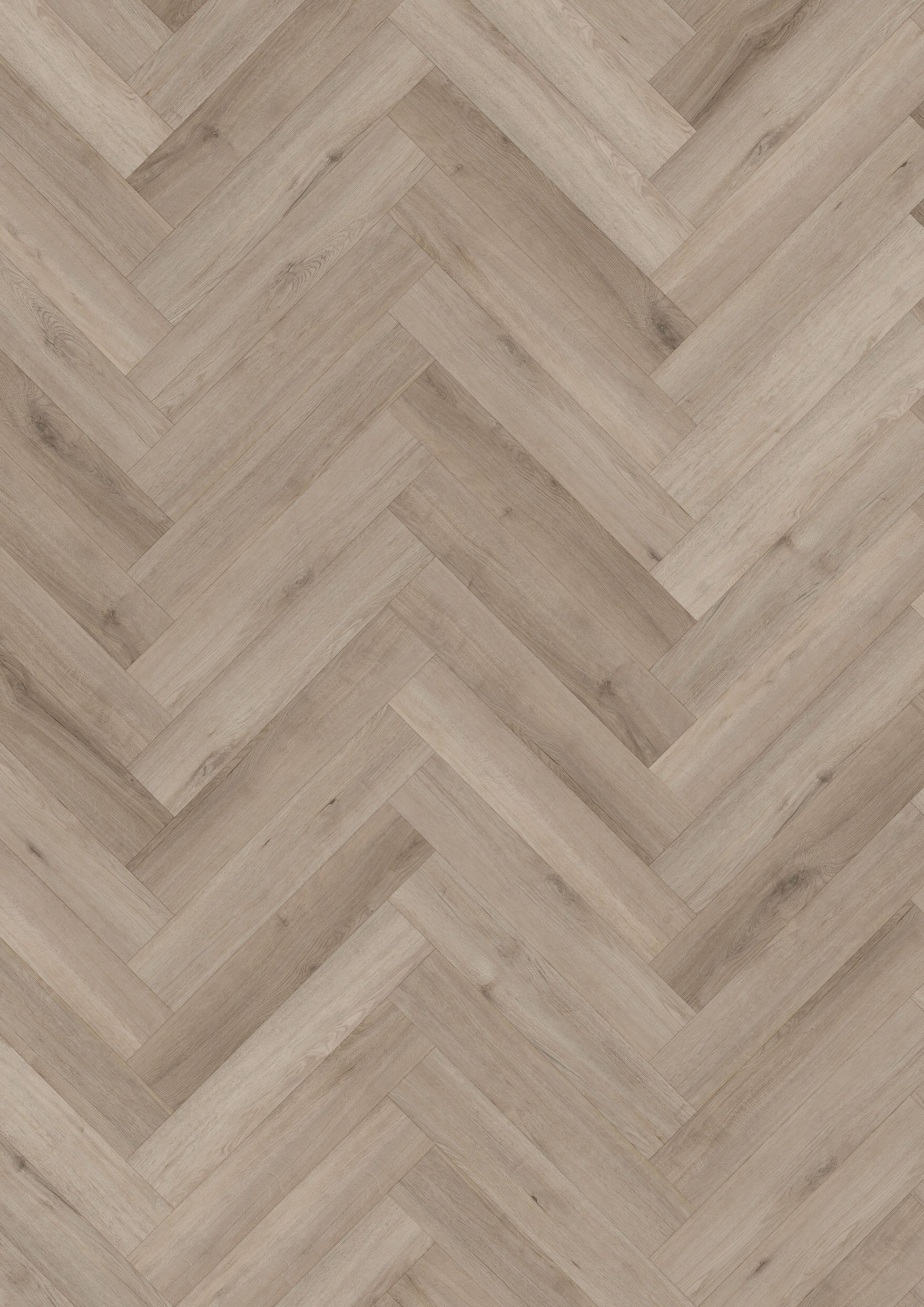 RW-D-771-D04Herringbone
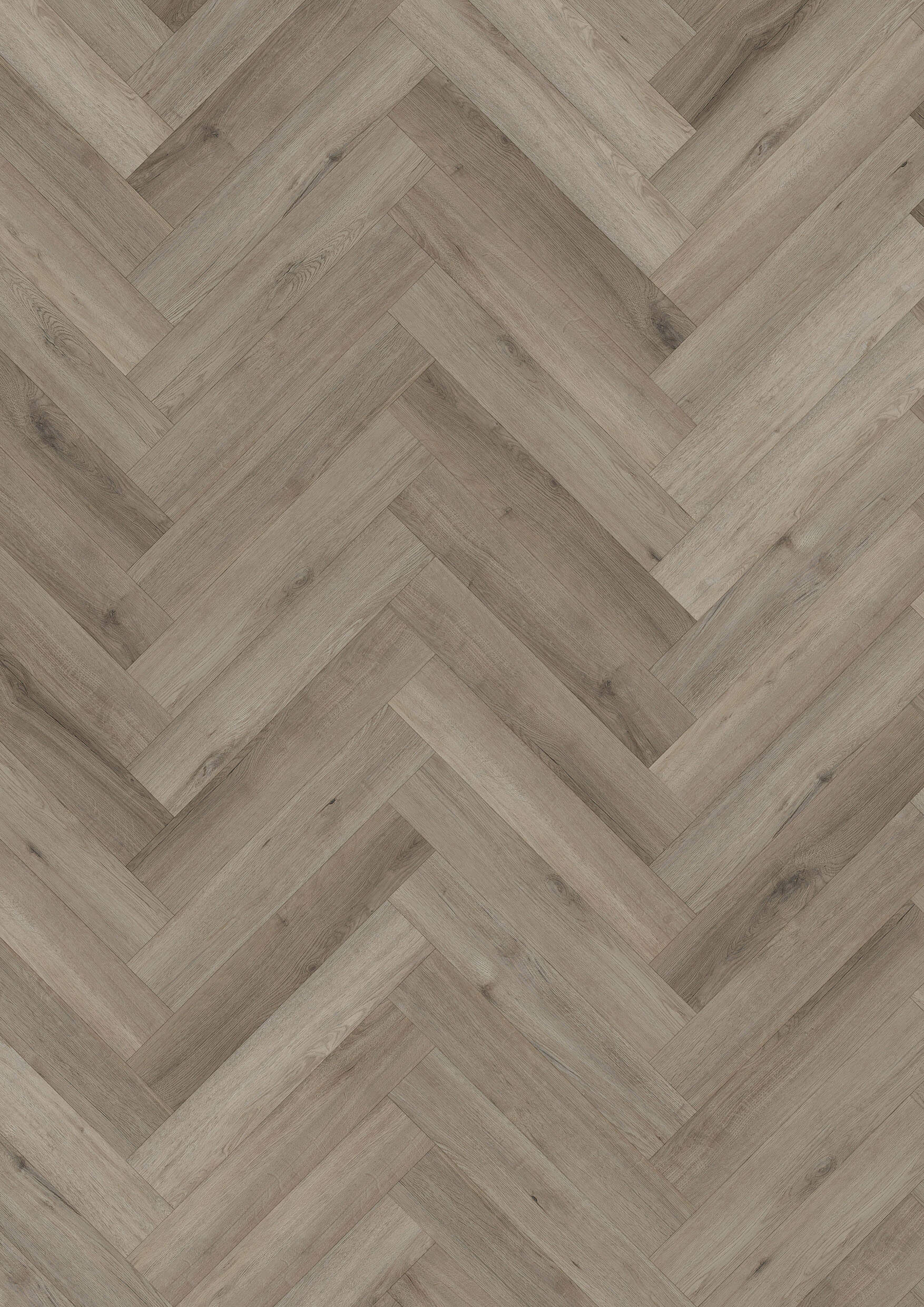 RW-D-771-D05Herringbone
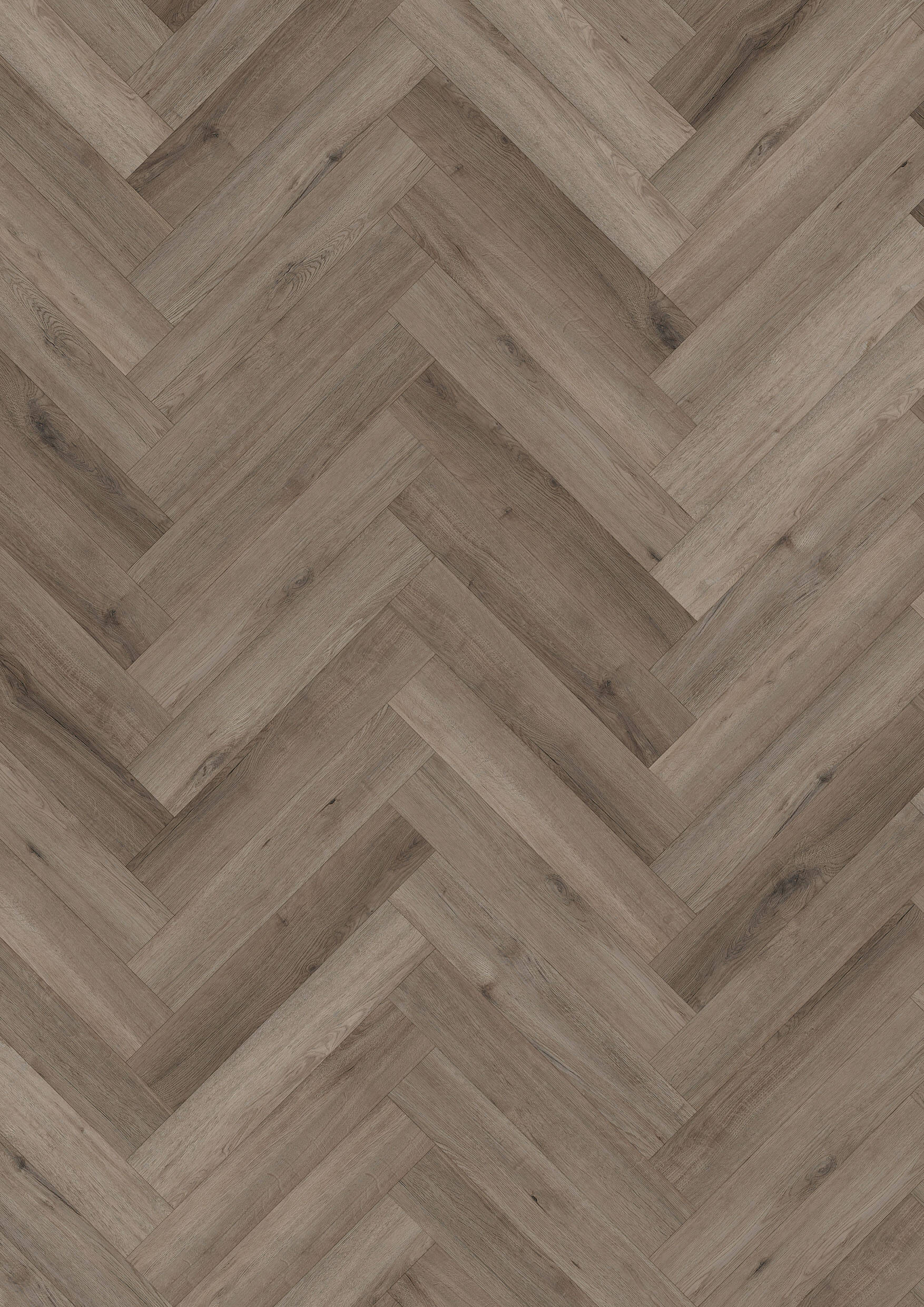 RW-D-771-D06Herringbone
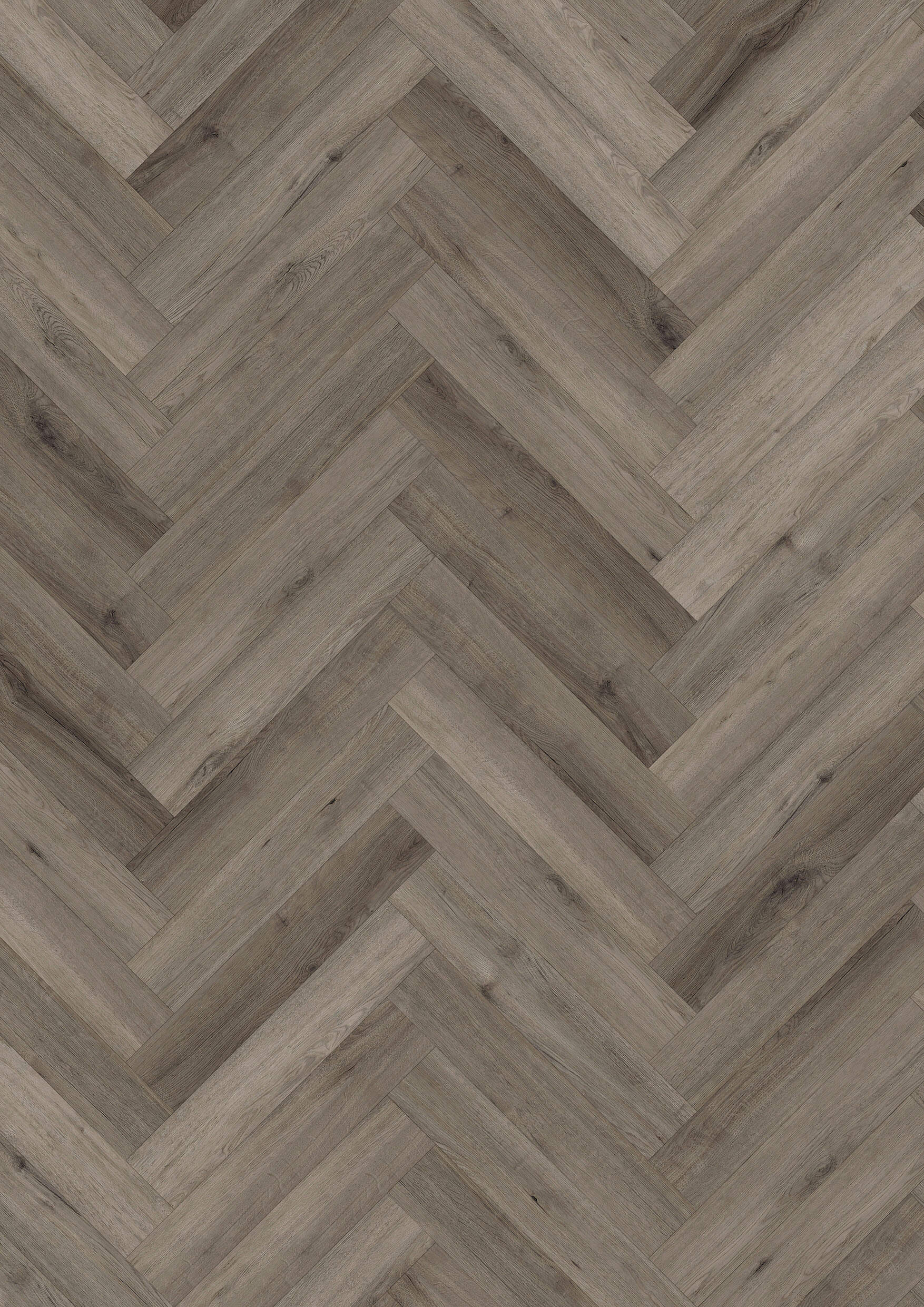 RW-D-771-D07Herringbone
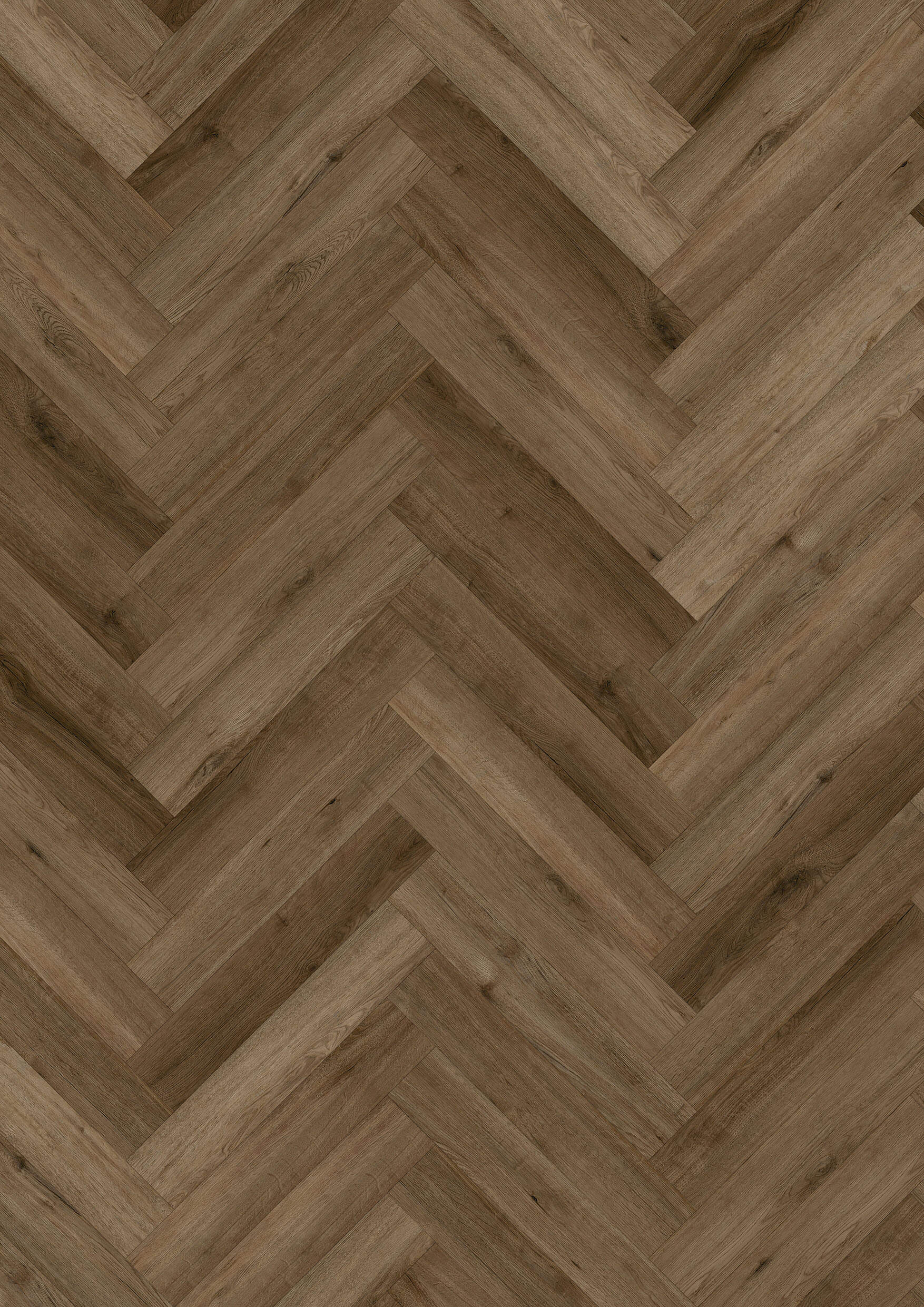 RW-D-771-D08Herringbone
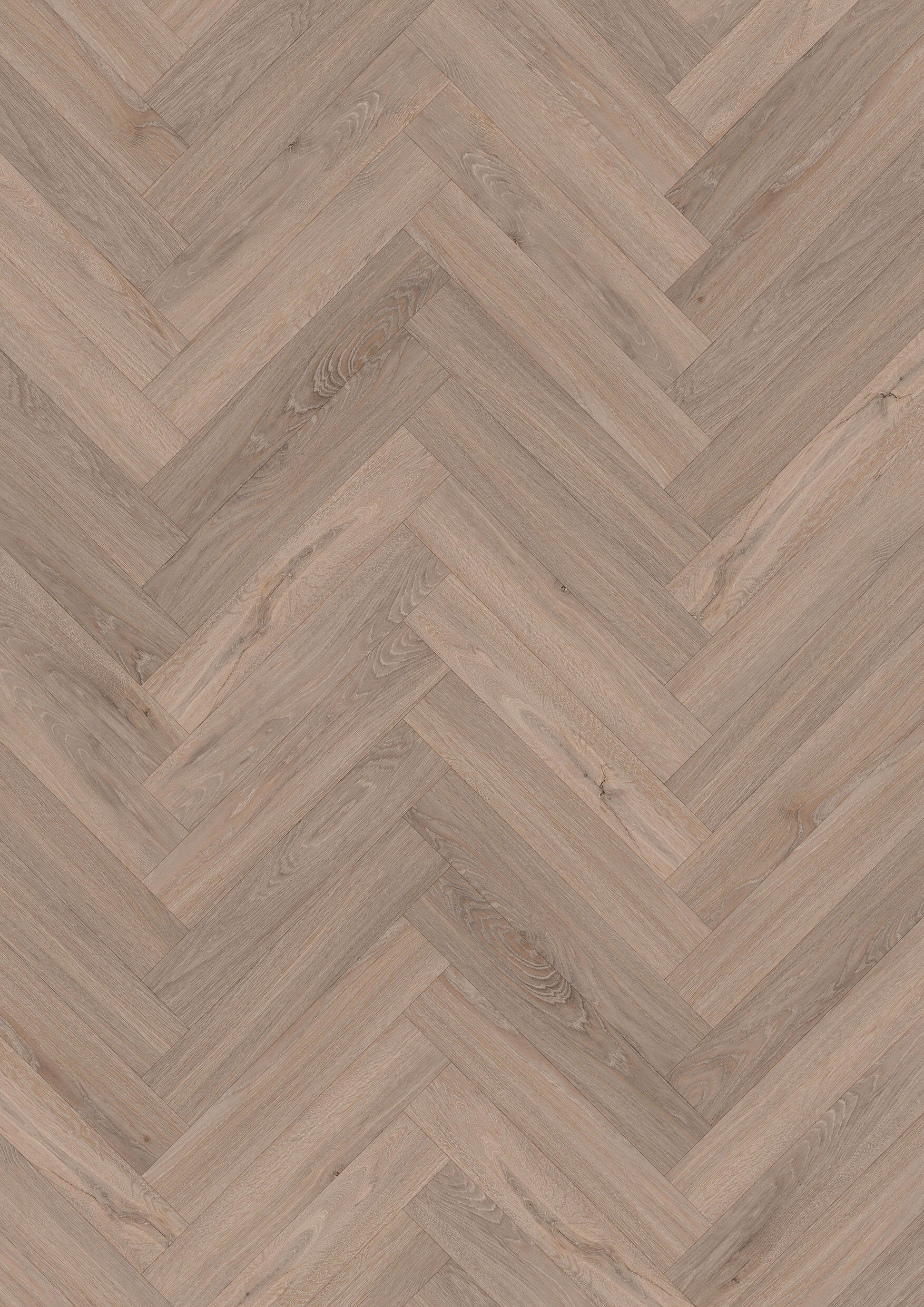 RW-D-761-D05Herringbone
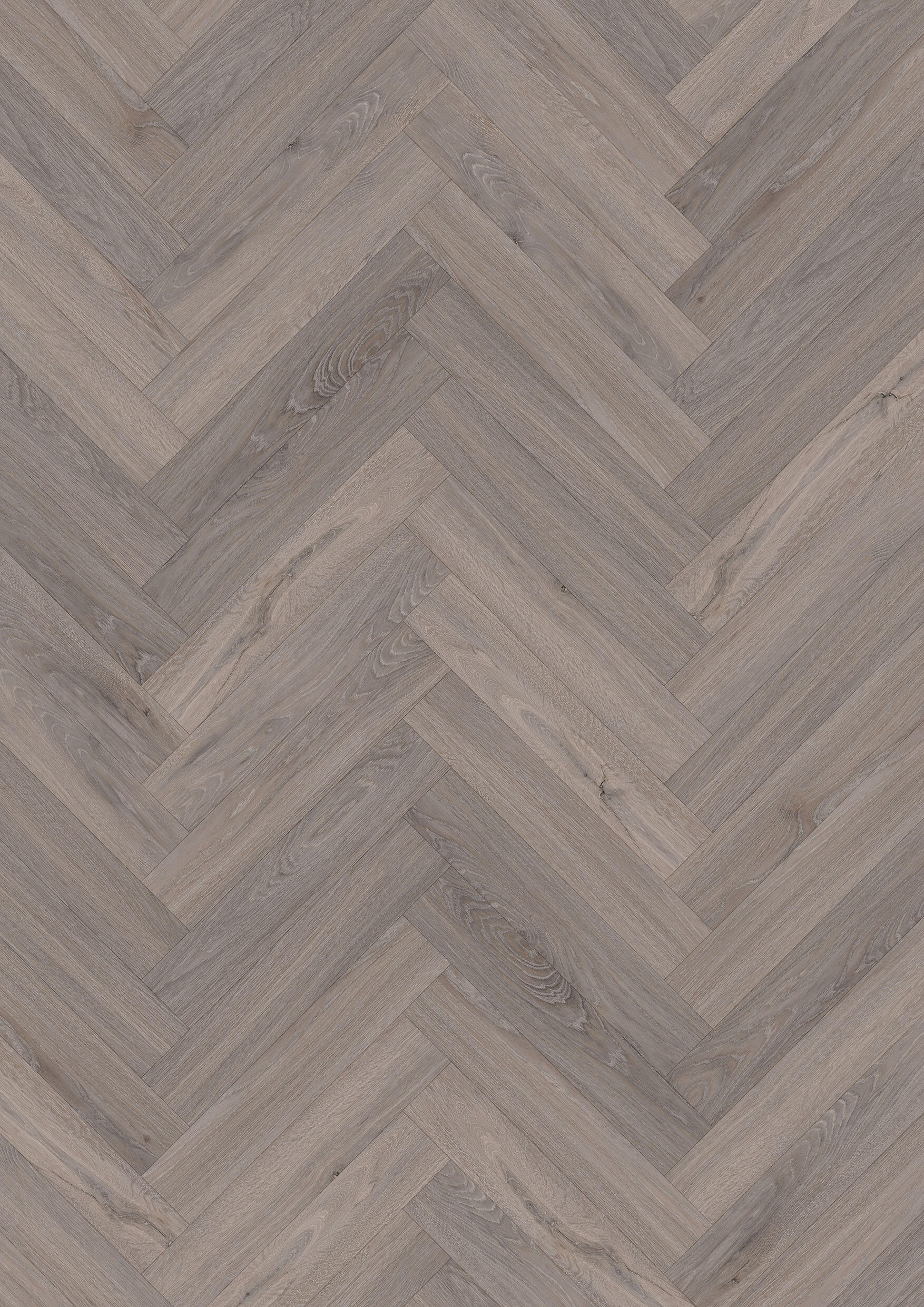 RW-D-761-D06Herringbone
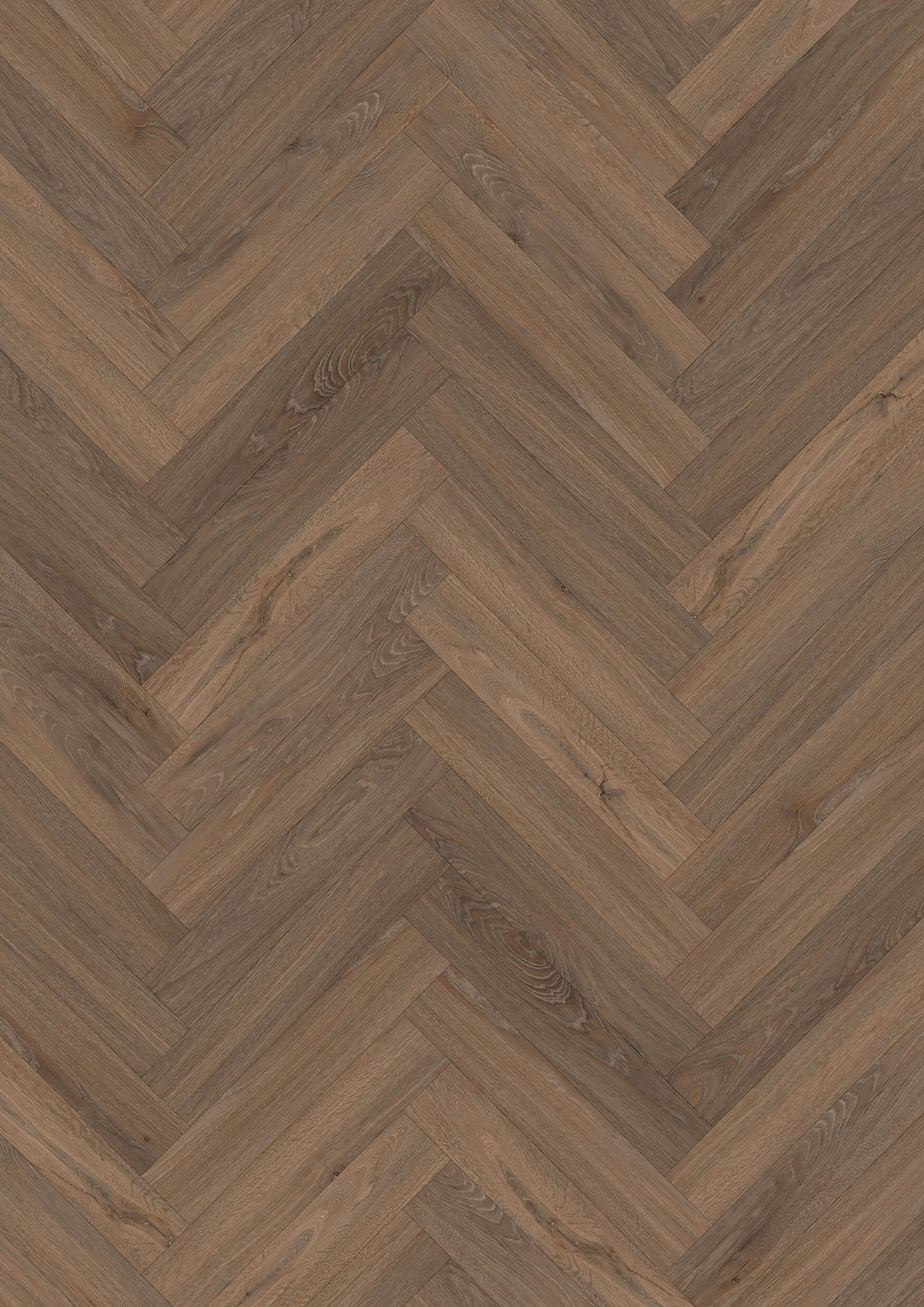 RW-D-761-D07Herringbone
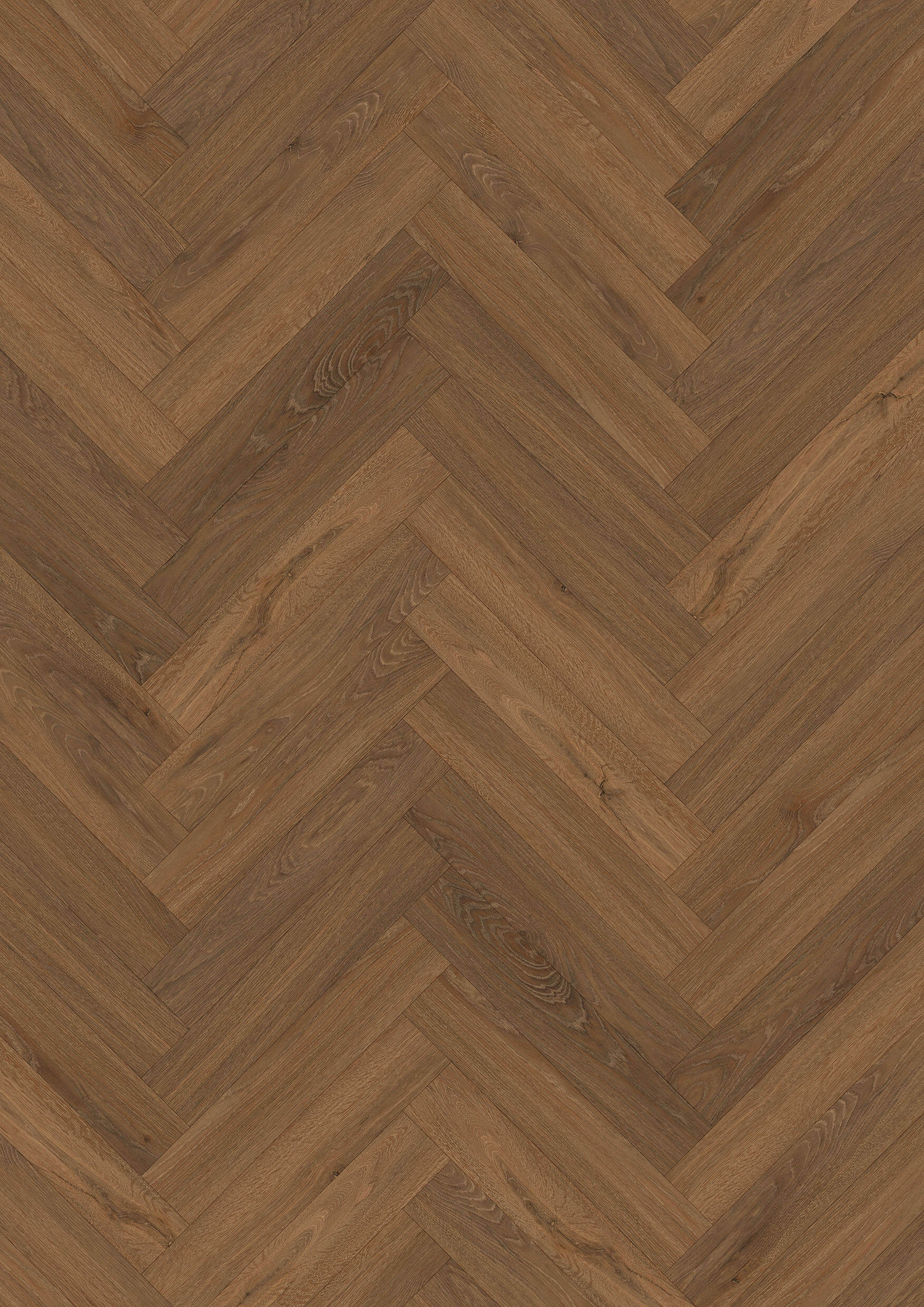 RW-D-761-D08Herringbone
Quote the decor code with your sample or price request. A decor shown on a plank can often run in herringbone too; matching one decor across both formats needs a physical sample before production. See embossed-in-register vinyl for EIR finishes.
Supply and ordering
Ordering & OEM
Terms we can state before we’ve seen your specification. The rest is confirmed in the quotation.
Ordering Information
- Minimum order
- 800 m² per design or colour. Colours can share a container as long as each one meets its own minimum.
- Custom decor
- From 2,200 m² per decor
- Production lead time
- Generally 35–40 days, reconfirmed when the order is placed
- Quotation basis
- FOB Shanghai is the default quotation basis. Other ports can be coordinated when required.
- Samples
- Sample kits available on request. See sample requests.
- Customs classification
- Commonly declared under HS 3918.10. The importer or customs broker confirms the final code for the destination. HS code guide
- A and B quantities
- Click herringbone: quoted as separate lines, normally equal
- Payment terms
- Confirmed in the quotation
OEM & Private Label
Herringbone can ship under your brand, with cartons and labels printed to your artwork and your choice of build, click or glue-down, size, wear layer and decors. Documents issued for a private-label order are agreed per order and per market. The OEM and private-label programme covers artwork, approvals and the first-order sequence.
Buyer questions
Herringbone Vinyl Plank FAQs
Which herringbone sizes do you make?
110 × 610 mm on SPC, click LVT and ABA, 150 × 750 mm on SPC, and 153 × 765 mm on 2.5 and 3 mm Dryback. Those are the sizes on our current datasheets. If your range needs another size, such as 120 × 600 mm, send it with the build and quantity and we’ll confirm whether it can be produced and on what terms before it goes into a price list.
Do I need equal quantities of A and B boards?
On click herringbone, normally yes. The pattern alternates A and B, so a standard layout uses them one for one. Your installer’s layout plan can change the split at borders and around fixed features. We quote A and B as separate lines so the split is visible.
How much extra should I order for cutting?
We don’t publish a waste percentage. Herringbone is cut at every wall, and the allowance depends on room shape, the setting-out line and any border. Ask your installer for a figure from the room plan and add it to both A and B.
Click or glue-down herringbone?
Glue-down Dryback is fixed to the substrate board by board, which suits specifications that require a bonded floor. It needs a prepared substrate and an adhesive matched to the SKU. Click herringbone floats on its joint and needs no adhesive bed. Choose on what your specification names for fixing, then on thickness and wear layer.
SPC or click LVT for click herringbone?
SPC is rigid, carries an attached 1.0 mm IXPE and offers both sizes and wear layers up to 0.70 mm. Click LVT is flexible, thinner and lighter, so it loads more floor per container, but runs only in 110 × 610 mm with a 0.30 or 0.50 mm wear layer. Choose on the thickness, wear layer and documents your range or tender names.
Is your herringbone rated for commercial areas?
Our SPC, click LVT and ABA herringbone datasheets declare no utilisation class. On Dryback herringbone the class depends on the wear layer and is confirmed for the exact SKU. Send the class, the traffic and the standard your specification names, and we’ll say whether a build fits. A class on a submittal has to be backed by a report for the exact SKU.
What fire rating does herringbone have?
We don’t publish a range-wide fire class. Fire results belong to the construction, thickness and decor that was tested. Name the class and market, for example Bfl-s1 under EN 13501-1 for the EU, and we’ll tell you which reports we hold for that build.
Can herringbone and plank go in the same container?
Yes, within one build family. Each build, size, wear layer and decor is its own SKU and meets its own minimum under the ordering terms. Herringbone and plank cartons weigh and stack differently, so a mixed load is calculated from your split.
Can you match a plank decor in herringbone?
Often, but confirm it on samples. The same print on a shorter board shows less of the grain, and EIR emboss has to register to each format. We send both formats as samples before production.
Quotation
Request a Quote or Sample
Name, company, country, email and an estimated quantity are enough to start. Add any of these and the quotation comes back matched to your build:
- Build and thickness: SPC 5–8 mm, click LVT 4–5 mm, ABA, or Dryback 2.5 or 3 mm
- Size: 110 × 610, 150 × 750 or 153 × 765 mm
- Wear layer and decor codes
- A and B quantities for click builds, or total area
- Class or standard, if your specification names one
- Number of colours, destination port and target delivery month
Prefer to write directly? Email sales@ecoflors.com or message us on WhatsApp +86 134 8633 9267. Other routes are on the contact page.
Request a Sample Kit
Herringbone boards in the builds, sizes and decors you’re considering, before you fix a colour list. Quote the decor codes above.
Request Sample KitRequest Quotation & Lead Time
Answered by our sales team, not an automated quote.